Other grades of this product :
| AFLATOXIN G1 Basic information |
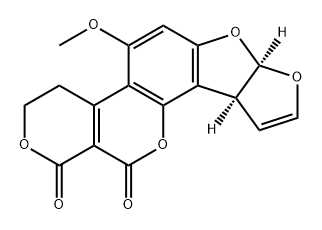
| Product Name: | AFLATOXIN G1 | | Synonyms: | (7ar-cis)-10a-tetrahydro-5-methoxy;10a-tetrahydro-5-methoxy-;1h,12h-furo(3’,2’:4,5)furo(2,3-h)pyrano(3,4-c)(1)benzopyran-1,12-dione,3,4,7a,;1H,12H-Furo[3',2':4,5]furo[2,3-h]pyrano[3,4-c][1]benzopyran-1,12-dione, 3,4,7a,10a-tetrahydro-5-methoxy-, (7aR-cis)-;5-Methoxy-3,4,7a,10a-tetrahydro-1H,12H-furo[3',2':4,5]furo[2,3-H]pyrano[3,4-c]chromene-1,12-dione;AFLATOXIN G;AFLATOXIN G1;Aflatoxin G1 (7aR,10aS)-3,4,7a,10a-Tetrahydro-5-methoxy-1H,12H-furo[3',2':4,5]furo[2,3-h]pyrano[3,4-c][1]benzopyran-1,12-dione | | CAS: | 1165-39-5 | | MF: | C17H12O7 | | MW: | 328.27 | | EINECS: | 214-615-9 | | Product Categories: | antibiotic;Chiral Reagents;Heterocycles;Intermediates & Fine Chemicals;Metabolites & Impurities;Pharmaceuticals;Biotoxins;Mycotoxins;Single component solutions;A;AA to ALBiotoxins;CRM&Matrix RMApplication CRMs;Food and Agriculture CRM;Other;Alphabetic;Cancer Research;CarcinogensCell Signaling and Neuroscience;Mold;Toxins and Venoms | | Mol File: | 1165-39-5.mol |
| AFLATOXIN G1 Chemical Properties |
| Melting point | 244-246 °C | | alpha | D -556° (chloroform) | | Boiling point | 386.03°C (rough estimate) | | density | 1.3358 (rough estimate) | | refractive index | 1.4790 (estimate) | | Fp | -11 °C | | storage temp. | 2-8°C | | form | neat | | Water Solubility | 15mg/L(temperature not stated) | | BRN | 1299768 | | EPA Substance Registry System | Aflatoxin G1 (1165-39-5) |
| AFLATOXIN G1 Usage And Synthesis |
| Chemical Properties | yellow powder | | Chemical Properties | The aflatoxins are a group of molds produced by the fungus Aspergillus flavus. They are natural contaminants of fruits, vegetables, and grains. They are also described as a series of condensed ring heterocyclic compounds. They form colorless to pale yellow crystals. Practically insoluble in water. | | Uses | Aflatoxins B1, B2, G1, G2 as secondary metabolites of fungal species such as Aspergillus flavus or Aspergillus parasiticus growing on a variety of foods (peanuts, nuts, spices, cereals). Aflatoxins a
re a group of very carcinogenic mycotoxins with hepatotoxic effects. | | Uses | Aflatoxin G1 is the major analogue of the green fluorescent family of bisfuranocoumarin mycotoxins produced by Aspergillus flavus and related species. Alfatoxins are one of the most potent mycotoxins known but are in fact "pre-toxins", requiring metabolic activation to the toxic principle. Aflatoxins are found widely in nature in trace amounts, particularly in grains and nuts. The toxicity of these metabolites was first recognised in the 1950s and their structures elucidated in 1963. Aflatoxins have been extensively reviewed. | | Uses | Aflatoxin G1 from Aspergillus flavus has been used as a standard for the determination of aflatoxin in various samples. | | General Description | Certan Vial | | Biochem/physiol Actions | Hepatocarcinogen. Food contaminant produced by Aspergillus flavus, a common soil fungus. | | Safety Profile | Confirmed human carcinogen with experimental carcinogenic and neoplastigenic data. Poison by ingestion and intraperitoneal routes. Mutation data reported. When heated to decomposition it emits acrid smoke and irritating fumes. See also various aflatoxins | | Potential Exposure | Aflatoxins are a group of toxic metabolites produced by certain types of fungi. Aflatoxins are not commercially manufactured; they are naturally occurring contaminants that are formed by fungi on food during conditions of high temperatures and high humidity. Most human exposure to aflatoxins occurs through ingestion of contaminated food. The estimated amount of aflatoxins that Americans consume daily is estimated to be 0.15 0.50 μg. Grains, peanuts, tree nuts, and cottonseed meal are among the more common foods on which these fungi grow. Meat, eggs, milk, and other edible products from animals that consume aflatoxincontaminated feed may also contain aflatoxins. Aflatoxins can also be breathed in | | Shipping | UN3172 Toxins, extracted from living sources, solid or liquid, Hazard Class: 6.1; Labels: 6.1-Poisonous materials, Technical Name Required. UN2811 Toxic solids, organic, n.o.s., Hazard Class: 6.1; Labels: 6.1-Poisonous materials, Technical Name Required. | | Incompatibilities | Incompatible with oxidizers (chlorates, nitrates, peroxides, permanganates, perchlorates, chlorine, bromine, fluorine, etc.); contact may cause fires or explosions. Keep away from alkaline materials, strong bases, strong acids, oxoacids, epoxides.
| | Waste Disposal | Consult with environmental regulatory agencies for guidance on acceptable disposal practices. Generators of waste containing this contaminant (≥100 kg/mo) must conform with EPA regulations governing storage, transportation, treatment, and waste disposal. Use of oxidizing agents, such as hydrogen peroxide or 5% sodium hypochlorite bleach. Acids and bases may also be used. |
| AFLATOXIN G1 Preparation Products And Raw materials |
|

 日本语
 한국어
 Français
 Deutsch
 España
 Türkiye