Other grades of this product :
| MG-132 Chemical Properties |
| Melting point | 80-84℃ (DEC.) | | alpha | -61~-67° | | Boiling point | 682.0±55.0 °C(Predicted) | | density | 1.073 | | Fp | 366℃ | | storage temp. | -20°C | | solubility | methanol: 1 mg/mL | | form | solid film | | pka | 11.14±0.46(Predicted) | | color | White | | Water Solubility | Soluble in ethanol, chloroform, methanol, water. | | Stability: | Stable for 2 years from date of purchase as supplied. Solutions in DMSO, DMF or ethanol may be stored at -20° for up to 1 week. | | InChIKey | TZYWCYJVHRLUCT-VABKMULXSA-N |
| Risk Statements | 36/37/38 | | Safety Statements | 24/25 | | WGK Germany | 3 | | HS Code | 29242990 |
| MG-132 Usage And Synthesis |
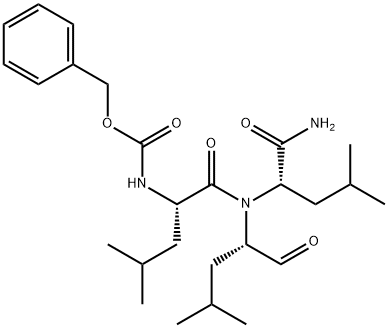
| Description | MG-132 (133407-82-6) is a specific inhibitor of the chymotrypsin-like activity of the 20S proteasome (IC50=100 nM with Z-LLL-AMC as substrate).1 Also inhibits calpain (IC50=1.25 μM).1 Suppresses gastric cancer cell proliferation and induces macro-autophagy.2 Activates stress kinases and induces Hsp72.3 Induces neurite outgrowth.1 MG-132 blocks NFκB activation by blocking IκB proteolysis (IC50=3 μM).4 Cell permeable. | | Uses | A proteasome and NF-κB inhibitor. | | Uses | MG 132 is a potent, membrane-permeable proteasome inhibitor. It induces neurite outgrowth in PC12 cells. Neuroprotective product. | | Definition | ChEBI: A tripeptide that is L-leucyl-L-leucyl-L-leucine in which the C-terminal carboxy group has been reduced to the corresponding aldehyde and the N-terminal amino group is
protected as its benzyloxycarbonyl derivative. | | General Description | Potent, reversible, and cell-permeable proteasome inhibitor (Ki = 4 nM). Reduces the degradation of ubiquitin-conjugated proteins in mammalian cells and permeable stains of yeast by the 26S complex without affecting its ATPase or isopeptidase activities. Activates c-Jun N-terminal kinase (JNK1) and inhibits NF-κB activation (IC50 = 3 μM). | | Biological Activity | Potent cell-permeable inhibitor of proteasome (IC 50 = 100 nM) and calpain (IC 50 = 1.2 μ M). Inhibits TNF- α -induced NF- κ B activation and I κ B α degradation. Induces neurite outgrowth in PC12 cells and has anticancer properties in vitro . | | Biochem/physiol Actions | Cell permeable: yes | | References | 1) Tsubuki et al. (1996), Differential inhibition of calpain and proteasome activities by peptidyl aldehydes of di-leucine and tri-leucine; J. Biochem.,? 119 572
2) Wu? et al. (2010), Macroautophagy and ERK phosphorylation counteract the antiproliferative effect of proteasome inhibitor in gastric cancer cells; Autophagy, 6 228
3) Meriin? et al. (1998), Proteasome inhibitors activate stress kinases and induce Hsp72. Diverse effects on apoptosis; J. Biol. Chem., 273 6373
4) Fiedler et al. (1998), Inhibition of TNF-alpha-induced NF-kappaB activation and IL-8 release in A549 cells with the proteasome inhibitor MG-132; Am. J. Respir. Cell Mol. Biol., 19 259 |
| MG-132 Preparation Products And Raw materials |
|


 日本语
日本语 한국어
한국어 Français
 Deutsch
 España
 Türkiye