Other grades of this product :
| STEAROYL-L-CARNITINE Basic information |
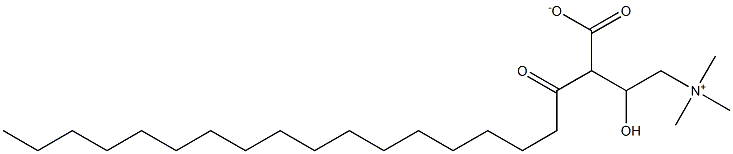
| Product Name: | STEAROYL-L-CARNITINE | | Synonyms: | STEAROYL-L-CARNITINE;Stearoyl-L-carnitine-[d3] (Solution);Stearoyl-L-carnitine >=97.0% (TLC) | | CAS: | 25597-09-5 | | MF: | C25H49NO4 | | MW: | 427.66086 | | EINECS: | | Product Categories: | | Mol File: | 25597-09-5.mol |
| STEAROYL-L-CARNITINE Chemical Properties |
| storage temp. | 2-8°C | | optical activity | [α]/D -15±2°, c = 1 in methanol | | BRN | 7309670 |
| STEAROYL-L-CARNITINE Usage And Synthesis |
| Uses | Stearoyl-L-carnitine may be used as an analytical reference standard for the quantification of the analyte in biological fluids using chromatography-based techniques. | | General Description | Stearoyl-L-carnitine is a naturally occurring compound belonging to the acylcarnitine class of compounds as listed in the human metabolome database (HMBD). These compounds are reported to be used as biomarkers in the diagnosis of carnitine deficiency. It acts as a carrier of long chain acyl groups from activated fatty acids across the inner mitochondrial membrane into the mitochondrial matrix where they undergo β-oxidation to acetyl CoA to obtain usable energy via the citric acid cycle. | | Biochem/physiol Actions | Stearoylcarnitine is found in significantly greater amounts in patients with carnitine palmitoyltransferase II deficiency. Carnitine palmitoyltransferase, in conjunction with acyl-CoA synthetase and carnitine/acylcarnitine translocase, provides the mechanism whereby long-chain fatty acids are transferred from the cytosol to the mitochondrial matrix to undergo beta-oxidation. |
| STEAROYL-L-CARNITINE Preparation Products And Raw materials |
|


 日本语
日本语 한국어
한국어 Français
 Deutsch
 España
 Türkiye