Other grades of this product :
| iCRT 14 Basic information |
| iCRT 14 Chemical Properties |
| Melting point | 183-186°C | | Boiling point | 567.0±60.0 °C(Predicted) | | density | 1.29±0.1 g/cm3(Predicted) | | storage temp. | 2-8°C | | solubility | DMSO: ≥10mg/mL | | form | powder | | pka | 2.09±0.12(Predicted) | | color | yellow to orange | | InChIKey | NCSHZXNGQYSKLR-UNOMPAQXSA-N |
| Hazard Codes | Xn | | Risk Statements | 22 | | WGK Germany | 3 |
| iCRT 14 Usage And Synthesis |
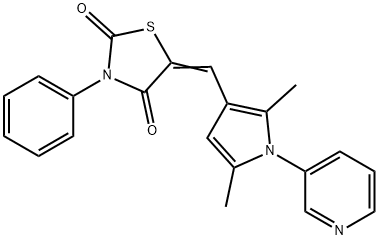
| Uses | A potent inhibitor of β-catenin-responsive transcription (CRT) (IC50 = 40.3 nM in assays of Wnt pathway activity). Studies suggest that it may directly influence the interaction between β-catenin and TCF4. It induces marked G0/G1 cell cycle arrest in HCT-116 and HT29 cell lines. | | Uses | iCRT14 may be used in Wnt /β-catenin-mediated cell signaling studies. | | Biological Activity | iCRT14 is a β-catenin/Tcf inhibitor with a Ki value of 54 ± 5.2 μM in the HFP assay. | | Biochem/physiol Actions | iCRT14 belongs to the thiazolidinedione class of β-catenin-responsive transcription inhibitors. It decreases the levels of Dishevelled protein and modulates the binding of T-cell factor (TCF) to DNA. It results in consistent decrease in reduction of cell proliferation and tumor growth in colon cancer cells. | | in vitro | iCRT14 inhibits the transcriptional activity of canonical Wnt signaling, downregulates Wnt/β-catenin-induced target genes, and inhibits the growth of colorectal cancer cells in vivo. iCRT14 moderately reduced Dvl without affecting Dvl phosphorylation. In mammalian HEK293 cells, iCRT14 inhibits the Wnt response element STF16-luc reporter gene with IC50 of 40.3 nM. In addition to affecting the TCF-β-catenin interaction, iCRT14 also interferes with the binding of TCF to DNA. | | in vivo | In HCT116 and HT29 xenograft models, iCRT14 caused a significant decrease in CycD1 and decreased tumor proliferation. In addition, the initial tumor growth rate decreased significantly during the first three weeks of dosing. After 19 days of administration, the tumor growth rate returned to the control level. During the study, the mice did not show any symptoms of systemic toxic effects or weight loss. The modified compound can be rapidly metabolized in the body, and its bioavailability is low. | | references | [1] gonsalves f c, klein k, carson b b, et al. an rnai-based chemical genetic screen identifies three small-molecule inhibitors of the wnt/wingless signaling pathway. proceedings of the national academy of sciences, 2011, 108(15): 5954-5963. |
| iCRT 14 Preparation Products And Raw materials |
|


 日本语
日本语 한국어
한국어 Français
 Deutsch
 España
 Türkiye