Other grades of this product :
| Afimoxifene Basic information |
| Afimoxifene Chemical Properties |
| Melting point | 135-144°C | | Boiling point | 514.4±50.0 °C(Predicted) | | density | 1.092 | | storage temp. | 2-8°C | | solubility | methanol: soluble10mg/mL | | form | solution | | pka | 9.38±0.15(Predicted) | | color | white to off-white |
| Hazard Codes | Xn | | Risk Statements | 63-20/21/22 | | Safety Statements | 22-23-36 | | RIDADR | UN1170 - class 3 - PG 2 - Ethanol, solution | | WGK Germany | 3 | | RTECS | SL1210000 |
| Afimoxifene Usage And Synthesis |
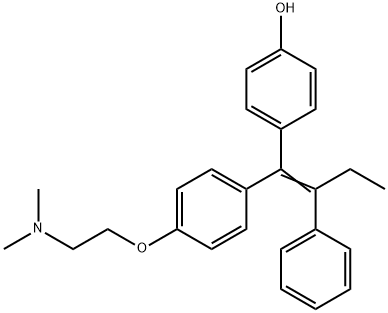
| Chemical Properties | Off-White Solid | | Uses | A selective estrogen receptor modulator. | | Uses | (E/Z)-4-Hydroxy Tamoxifen is selective estrogen receptor modulator. | | Brand name | TamoGel (Ascend Therapeutics). | | General Description | 4-Hydroxytamoxifen is a first generation, selective estrogen receptor modulator (SERM) that functions as an antagonist in breast cancer cells but can display estrogen-like activities in the uterus and bone. | | Biological Activity | 4-hydroxytamoxifen is an estrogen receptor modulator.estrogen receptor can be selectively stimulated or inhibited, providing promising therapeutic opportunities for auto-immune diseases, prostate and breast cancer, as well as depression. | | Biochem/physiol Actions | Metabolite of the chemotherapeutic drug tamoxifen, exhibiting more potent estrogen agonist/antagonist activity than the parent drug. Also active as intra-membranous inhibitor of lipid peroxidation. | | in vitro | previous study was conducted to evaluate the effects of tamoxifen and its active metabolite 4-hydroxytamoxifen on isolated rat cardiac myocyte mechanical function and calcium handling. results showed that myocytes treated with 4-hydroxytamoxifen had similarly to tamoxifen-treated cells to both calcium handling and contractility [1]. | | in vivo | previous animal study compared the extent of dna adduct formation in sd rats treated with seven tamoxifen or 4-hydroxytamoxifen. results showed that the liver weights and microsomal rates were not changed by tamoxifen or 4-hydroxytamoxifen treatment. moreover, the uterine weights were significantly decreased and uterine peroxidase activity was marginally decreased in tamoxifen or 4-hydroxytamoxifen treated rats. in addition, hepatic dna adduct levels in rats treated with 4-hydroxytamoxifen did not differ from control rats. similaryly, the adduct levels in uterus dna from rats treated with tamoxifen or 4-hydroxytamoxifen were not different from those in control rats [2]. | | IC 50 | 27 and 18 μm for mcf-7 and mda-mb-231 cell proliferation | | references | [1] asp ml,martindale jj,metzger jm. direct, differential effects of tamoxifen, 4-hydroxytamoxifen, and raloxifene on cardiac myocyte contractility and calcium handling. plos one.2013 oct 24;8(10):e78768. [2] beland fa,mcdaniel lp,marques mm. comparison of the dna adducts formed by tamoxifen and 4-hydroxytamoxifen in vivo. carcinogenesis.1999 mar;20(3):471-7.[3] lee o et al. a randomized phase ii presurgical trial of transdermal 4-hydroxytamoxifen gel versus oral tamoxifen in women with ductal carcinoma in situ of the breast. clin cancer res.2014 jul 15;20(14):3672-82. |
| Afimoxifene Preparation Products And Raw materials |
|


 日本语
日本语 한국어
한국어 Français
 Deutsch
 España
 Türkiye