Other grades of this product :
| MICROCYSTIN LA Basic information |
| MICROCYSTIN LA Chemical Properties |
| MICROCYSTIN LA Usage And Synthesis |
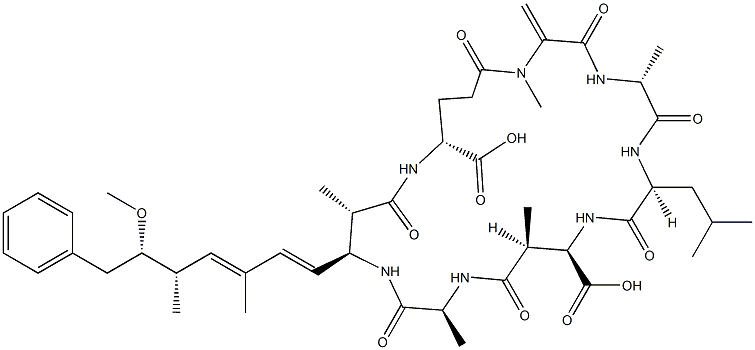
| Description | Microcystins are hepatotoxic cyclic heptapeptide toxins produced by cyanobacteria. They are responsible for periodic poisonings of humans and livestock following consumption of freshwater in areas where the blue-green algae are endemic. The toxicity of microcystins is initiated by the inhibition of the catalytic activity of protein phosphatase (PP) 1 and PP2A. Microcystin-LA differs from the major microcystin variant LR with the substitution of alanine in place of the arginine. It inhibits both PP1C and PP2A with an IC50 value of 0.3 nM. | | Uses | Microcystin LA from algae has been used as a standard for liquid chromatography/mass spectrometry (LCMS) for toxin analysis. | | General Description | Microcystin is a small, monocyclic peptide, composed of seven amino acids connected via peptide bonds. It is a cyanotoxin with hepatotoxic and tumor promoting properties. Several algal genera like Anabaena, Aphanizomenon, Microcystis and Planktothrix produce microcystin. Microcystin has four congeners namely, -LR, -LA, -YR and -RR. | | Biochem/physiol Actions | Microcystin LA inhibits protein phosphatase type 2A and protein phosphatase type 3 more potently than protein phosphatase type 1 (order of potency PP2A > PP3 > PP1). Induces neutrophil-activating chemokines and extracellular reactive oxygen species, possible mechanisms of its hepatotoxic effects. |
| MICROCYSTIN LA Preparation Products And Raw materials |
|


 日本语
日本语 한국어
한국어 Français
 Deutsch
 España
 Türkiye