Other grades of this product :
| Copper quinolate Basic information |
| Copper quinolate Chemical Properties |
| Hazard Codes | Xi | | Risk Statements | 36/37/38 | | Safety Statements | 26-36 | | RIDADR | 3077 | | WGK Germany | 3 | | RTECS | VC5250000 | | Hazard Note | Irritant | | TSCA | Yes | | HazardClass | 9 | | PackingGroup | III | | HS Code | 29334900 |
| Copper quinolate Usage And Synthesis |
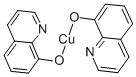
| Chemical Properties | Yellow solid | | Chemical Properties | Yellow-green crystalline solid or powder. Odorless. | | Uses | Fungicide and mildew-proofing of fabrics, analysis for copper. | | Uses | bis(8-Quinolinolato-κN1,κO8)-Copper is a disinfectant for vegetables. High polarity pesticide. | | Hazard | Toxic by ingestion. Questionable carcinogen. | | Potential Exposure | Fungicide and microbiocide. | | Shipping | UN3077 Environmentally Hazardous substances, solid, n.o.s., Hazard class: 9; Labels: 9-Miscellaneous hazardous material, Technical Name Required. | | Incompatibilities | May form highly unstable acetylides. Decomposes on burning producing toxic and corrosive fumes including copper and nitrogen oxides | | Waste Disposal | Copper-containing soluble wastes can be concentrated through the use of ion exchange, reverse osmosis, or evaporators to the point where copper can be electrolytically removed and sent to a reclaiming firm. If recovery is not feasible, the copper can be precipitated through the use of caustics and the sludge deposited in a chemical waste landfill Copper-containing wastes can be concentrated through the use of ion exchange, reverse osmosis, or evaporators to the point where copper can be electrolytically removed and sent to a reclaiming firm. Details of copper recovery from a variety of industrial wastes have been published. If recovery is not feasible, the copper can be precipitated by the use of caustics and the sludge deposited in a chemical waste landfill. Recommendable Methods: Precipitation, solidification, landfill, discharge to sewer, & incineration. Peer-review: Precipitate copper with alkali, filter, solidify precipitate. (Do not use ammonia as alkali). Cation exchange will allow recovery of copper. Eluate from cation exchanger can be passed through anion exchanger to remove (or reduce) naphthenic acid content. Exhausted ion exchange resins can be landfilled. (Peer-review conclusions of an IRPTC expert consultation) |
| Copper quinolate Preparation Products And Raw materials |
|

 日本语
日本语 한국어
한국어 Français
 Deutsch
 España
 Türkiye