Other grades of this product :
| Phenytoin sodium Basic information |
| Phenytoin sodium Chemical Properties |
| Hazard Codes | Xn | | Risk Statements | 22-43-62-63 | | Safety Statements | 22-36/37/39-45 | | RIDADR | UN 2811 6.1/PG 3 | | WGK Germany | 3 | | RTECS | MU1400000 | | HazardClass | 6.1(b) | | PackingGroup | III | | HS Code | 29332100 | | Toxicity | LD50 orally in mice: 490 mg/kg (Fink, Swinyard) |
| Phenytoin sodium Usage And Synthesis |
| Chemical Properties | White or almost white, crystalline powder, slightly hygroscopic. | | Uses | antibacterial | | Uses | Antiepileptic | | Uses | 5,5-Diphenylhydantoin sodium salt has been used:- in the cream preparation for treating burn wounds
- in seizure behavior testing as an anticonvulsant in Drosophila
- in in vivo embryo toxicity test in mouse embryonic stem cells
| | Brand name | Diphenylan (Lannett); Phenytek (Mylan);
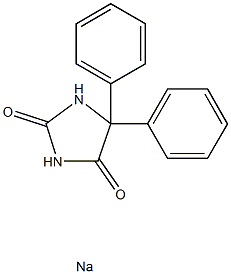
Phenytex (Watson) [Name previously used: Diphenylhydantoin Sodium.]. | | General Description | Phenytoin sodium, 5,5-diphenyl-2,4-imidazolidinedione, 5,5-diphenylhydantoin,diphenyl-hydantoin sodium (Dilantin), has been used fordecades in the control of grand mal types of epilepticseizure. It is structurally analogous to the barbiturates butdoes not possess their extensive sedative properties. Thecompound is available as the sodium salt. Solutions for parenteraladministration contain 40% propylene glycol and10% alcohol to dissolve the sodium salt. | | Clinical Use | Phenytoin sodium’s cardiovascular effects were uncoveredduring observation of toxic manifestations of the drugin patients being treated for seizure disorders. Phenytoinsodium was found to cause bradycardia, prolong the PRinterval, and produce T-wave abnormalities on electrocardiograms.It is a class IB antiarrhythmic agent. Today,phenytoin sodium’s greatest clinical use as an antiarrhythmicdrug is in the treatment of digitalis-induced arrhythmias.34 Its action is similar to that of lidocaine. It depressesventricular automaticity produced by digitalis, without adverseintraventricular conduction. Because it also reversesthe prolongation of AV conduction by digitalis, phenytoinsodium is useful in supraventricular tachycardias caused bydigitalis intoxication. | | Safety Profile | Confirmed
carcinogen. Experimental teratogen. Other
experimental reproductive effects. Poison by
ingestion, subcutaneous, intravenous, and
intraperitoneal routes. Human systemic
effects by ingestion: anorexia, respiratory
depression, nausea or vomiting,
hemorrhage, dermatitis, and endocrine
effects. Mutation data reported. An
anticonvulsant and cardiac depressant used
for the treatment of grand mal and
psychomotor seizures. When heated to
decomposition it emits very toxic fumes of
NOx and Na2O. | | Carcinogenicity | Phenytoin and its sodium salt are reasonably anticipated to be human carcinogens based on sufficient evidence from studies in experimental animals. |
| Phenytoin sodium Preparation Products And Raw materials |
|


 日本语
日本语 한국어
한국어 Français
 Deutsch
 España
 Türkiye