| Description | Oxaloacetic acid is an α-keto acid and a key component of cellular metabolism in its conjugate base form, oxaloacetate. Oxaloacetate reacts with acetyl-coenzyme A (acetyl-CoA; ) and water to form citrate in the first step of the citric acid cycle and is regenerated by oxidation of L-malate in the final step. It is an intermediate in gluconeogenesis that is formed in mitochondria via carboxylation of pyruvate and subsequently decarboxylated and phosphorylated to form phosphoenolpyruvate. It can be converted to aspartate via addition of an amino group from glutamate. Oxaloacetate (30 μmol/min per 100 g for 30 minutes, i.v.) reduces blood glutamate levels, severity of neurological dysfunction, and brain edema in a rat model of closed head injury. |
| Chemical Properties | off-white crystals |
| Uses | A four carbon dicarboxylic acid that is an intermediate in the citric acid cycle and glucogenesis. It has been shown to inhibit succinate dehydrogenase. |
| Uses | Use as a TCA (Krebs cycle) intermediate supplement in hybridoma cell culture applications. Enhances hybridoma growth and productivity. |
| Uses | Oxaloacetic acid is a substrate for malate dehydrogenase and oxaloacetate decarboxylase. It is an inhibitor of succinic dehydrogenase. It is an intermediate in the citric acid cycle and glucogenesis. |
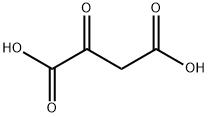
| Definition | ChEBI: An oxodicarboxylic acid that is succinic acid bearing a single oxo group. |
| General Description | Oxaloacetic acid is a dicarboxylic acid. It is an intermediate in the citric acid cycle. It is highly soluble in water and is present ubiquitously. It is produced in the mitochondria by the action of pyruvate carboxylase on pyruvate. Breakdown products of oxaloacetate includes malate, pyruvate and aspartic acid. |
| Flammability and Explosibility | Notclassified |
| Biological Activity | Oxalacetic acid (Oxaloacetic acid, 2-Oxosuccinic acid, Ketosuccinic acid) is an intermediate of the citric acid cycle, where it reacts with acetyl-CoA to form citrate, catalysed by citrate synthase. It is also involved in gluconeogenesis, urea cycle, glyoxylate cycle, amino acid synthesis, and fatty acid synthesis. Oxaloacetate is also a potent inhibitor of Complex II. |
| Biochem/physiol Actions | Oxaloacetic acid being an intermediate in the tri carboxylic cycle is central to metabolism. It is part of gluconeogenesis pathway. Mutation in pyruvate carboxylase leads to decreased production of oxaloacetate. It inhibits succinate dehydrogenase and is a key regulator of mitochondrial metabolism. |
| Purification Methods | Crystallise it from boiling EtOAc, or from hot Me2CO/hot *C6H6. [Beilstein 3 IV 1808.] |


 日本语
日本语 한국어
한국어 Français
 Deutsch
 España
 Türkiye