Other grades of this product :
| Lixisenatide Basic information |
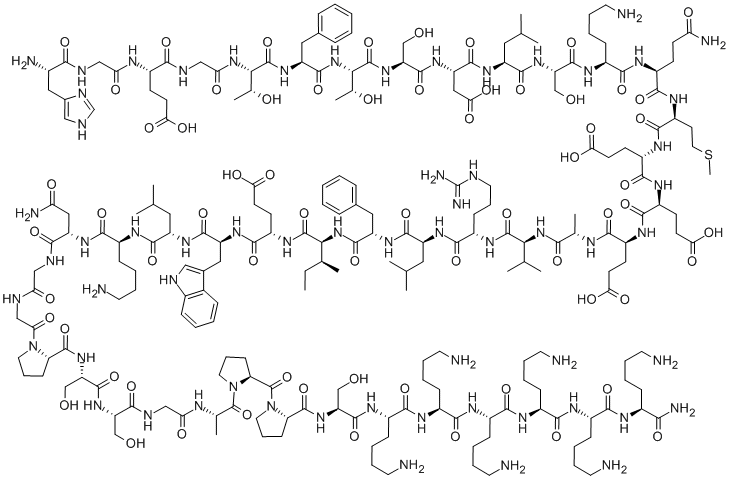
| Product Name: | Lixisenatide | | Synonyms: | Lixisenatide, >98%;lixisenatide;Lixisenatide|Lixisenatide Acetate;Lixisenatide Acetate;Lixisenatide USP/EP/BP;Lyxumia | | CAS: | 320367-13-3 | | MF: | C215H347N61O65S | | MW: | 4858.53 | | EINECS: | | Product Categories: | | Mol File: | 320367-13-3.mol |
| Lixisenatide Chemical Properties |
| Lixisenatide Usage And Synthesis |
| Description | Lixisenatide injection is used to treat type 2 diabetes mellitus. Lixisenatide is used together with diet and exercise to help control your blood sugar. This medicine is a glucagon-like peptide-1 (GLP-1) receptor agonist. | | History | Lixisenatide (brand name Lyxumia), has been available since 2013 in many other countries. It is now the fifth GLP-1 receptor agonist to be approved in the United States. | | Uses | Lixisenatide injection is used along with diet and exercise to treat type 2 diabetes (condition in which the body does not use insulin normally and therefore cannot control the amount of sugar in the blood). Lixisenatide injection is not used to treat type 1 diabetes (condition in which the body does not produce insulin and therefore cannot control the amount of sugar in the blood). Lixisenatide is not used instead of insulin to treat people with diabetes who need insulin. Lixisenatide injection is in a class of medications called incretin mimetics. It works by stimulating the pancreas to secrete insulin when blood sugar levels are high. Insulin helps move sugar from the blood into other body tissues where it is used for energy. Lixisenatide injection also slows the emptying of the stomach and causes a decrease in appetite. | | Indications | Both Adlyxin and Soliqua 100/33 are FDA-approved as adjunct to diet and exercise to improve glycemic control in adults with type 2 diabetes mellitus. Soliqua 100/33 is indicated specifically in those inadequately controlled on basal insulin (less than 60 units daily) or lixisenatide. | | Mechanism of action | Lixisenatide is a GLP-1 receptor agonist that works by increasing glucose-dependent insulin release, decreasing glucagon secretion, and slowing gastric emptying.Insulin glargine works through regulation of glucose metabolism. Specifically, insulin lowers blood glucose by stimulating peripheral glucose uptake, especially by skeletal muscle and fat, and by inhibiting hepatic glucose production. | | Pharmacology | Lixisenatide acts as an agonist at the GLP-1 receptor. In the pancreas, this agonism results in increased glucose-stimulated insulin exocytosis by beta islet cells. This produces a reduction in blood glucose due to increased glucose uptake by tissues 1. GLP-1 receptor activation in the GI tract results in delayed gastric emptying which is thought to mediate the effects of lixisenatide on postprandial blood glucose. | | Clinical Use | #N/A | | Safety | The most common adverse reactions associated with lixisenatide during clinical trials were hypoglycemia, allergic reactions, nausea, nasopharyngitis, upper respiratory tract infection, and headache. | | Drug interactions | Potentially hazardous interactions with other drugs
Anti-arrhythmics: concentration of lomitapide
possibly increased by dronedarone - avoid.
Antibacterials: concentration of lomitapide possible
increased by clarithromycin and erythromycin -
avoid.
Anticoagulants: increases warfarin concentration.
Antifungals: concentration of lomitapide possibly
increased by ketoconazole and triazoles - avoid.
Antivirals: concentration of lomitapide possibly
increased by darunavir, fosamprenavir, indinavir,
lopinavir, ritonavir, saquinavir, telaprevir and
tipranavir - avoid.
Bicalutamide: separate lomitapide and bicalutamide
administration by 12 hours.
Calcium channel blockers: concentration of
lomitapide possibly increased by diltiazem and
verapamil - avoid.
Lipid lowering agents: reduce simvastatin dose by
50% if used together | | Metabolism | As a peptide, lixisenatide is eliminated through
glomerular filtration, followed by tubular reabsorption
and subsequent metabolic degradation, resulting in
smaller peptides and amino acids, which are reintroduced
in the protein metabolism. |
| Lixisenatide Preparation Products And Raw materials |
|


 日本语
日本语 한국어
한국어 Français
 Deutsch
 España
 Türkiye