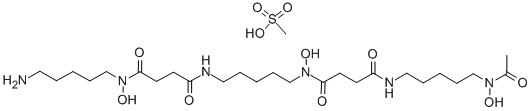
| Description | Deferoxamine is a bacterial siderophore that chelates iron. It is used to experimentally inhibit iron-dependent prolyl hydroxylases (EC50 = 17.8 μM), thus preventing the degradation of isoforms of hypoxia inducible factor during normoxia. Deferoxamine has applications in diseases that are characterized by high levels of circulating iron, such as thalassemia major. |
| Chemical Properties | DEFEROXAMINE MESYLATE is white or almost white powder.
|
| Uses | DEFEROXAMINE MESYLATE is an iron chelating agent used in therapy for patients with sickle cell diseases and iron overload. Studies suggest that it can exert potential antioxidant neuroprotective effects in stroke patients
|
| Uses | chelating agent (Fe & Al) |
| Brand name | Desferal (Novartis). |
| Biochem/physiol Actions | An iron chelator used often in the studies of cell proliferation and apoptosis. Has been shown to have anti-proliferative effects on vascular smooth muscle cells in vitro and in vivo and to arrest cells in the G1 phase. Also reported to induce p53. Induces apoptosis in HL-60 cells by chelating iron. After 48 hrs treatment with 1μM deferoxamine, DNA fragmentation was apparent. Cells treated with 0.1 μM deferoxamine for as little as 24 hours were committed to apoptosis; by 48 hrs nuclear collapse was observed. In some studies it has been shown to have antioxidant properties and to protect cells against H2O2-induced damage. |
| Clinical Use | Chelating agent:Acute iron poisoningChronic iron or aluminium overload |
| Veterinary Drugs and Treatments | Deferoxamine is used for the treatment of either acute or chronic
iron toxicity. It is being evaluated as an iron chelator for adjunctive
treatment of acute cardiac ischemia and as a chelator for aluminum
toxicity. Its efficacy in treating reperfusion injuries has been disappointing. |
| Drug interactions | Potentially hazardous interactions with other drugsAvoid prochlorperazine, levomepromazine and
methotrimeprazine (prolonged unconsciousness).Do not administer with blood. |
| Metabolism | When given parenterally desferrioxamine forms chelates
with iron and aluminium ions to form ferrioxamine and
aluminoxamine, respectively. The chelates are excreted
in the urine and faeces via the bile. Desferrioxamine is
metabolised, mainly in the plasma. Four metabolites of
desferrioxamine were isolated from urine of patients with
iron overload. The following biotransformation reactions
were found to occur with desferrioxamine: transamination
and oxidation yielding an acid metabolite, beta-oxidation
also yielding an acid metabolite, decarboxylation and
N-hydroxylation yielding neutral metabolites. |


 日本语
日本语 한국어
한국어 Français
 Deutsch
 España
 Türkiye