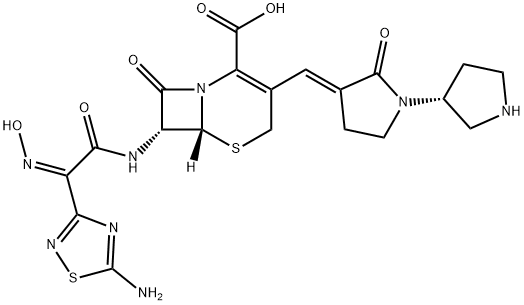
| Uses | Broad spectrum antibiotic. |
| Antimicrobial activity | The most important property distinguishing it from older
cephalosporins is activity against methicillin-resistant staphylococci,
a property conferred by a high affinity for penicillinbinding
protein 2′ (2a). MICs for methicillin-resistant strains
are nevertheless somewhat higher than those seen with fully
susceptible strains. A similar situation exists with coagulasenegative
staphylococci and with Str. pneumoniae, for which
strains with reduced susceptibility to penicillin are less susceptible
than fully resistant strains, while remaining within
therapeutically achievable levels.
Otherwise activity approximates to that of cephalosporins
of group 4 . Activity against Ps. aeruginosa is modest
and much reduced against ceftazidime-resistant strains. |
| Acquired resistance | It is hydrolyzed by extended spectrum β-lactamases of enterobacteria
, which are therefore resistant. The prospects
for the emergence of resistance during extensive clinical
use are presently unclear, though increased resistance in
Staph. aureus appears to be difficult to induce under laboratory
conditions. |
| Pharmacokinetics | Cmax 500 mg (667 mg prodrug): c. 35 mg/L end infusion
intravenous (30-min infusion)
Plasma half-life: c. 3 h
Volume of distribution: 18.4 L
Plasma protein binding: 16%
The prodrug is rapidly hydrolyzed in plasma to release the
active form together with diacetyl (2,3-butanediol) and CO2.
Distribution approximates to the extracellular fluid volume in
adults. There is no accumulation on repeat dosing in subjects
with normal renal function.
It is chiefly excreted in urine by glomerular filtration. A urinary
concentration exceeding 1 g/L is achieved within the first
2 h of a 500 mg (active drug equivalent) dose and 80–90% of
active drug can be recovered within 24 h. |
| Clinical Use | Ceftobiprole can be used as Broad spectrum antibiotic and in complicated infections of skin and skin structures. |
| Side effects | Limited studies have so far revealed no unexpected side
effects. Nausea, vomiting and altered taste sensation appear
to be the most common. |


 日本语
日本语 한국어
한국어 Français
 Deutsch
 España
 Türkiye