Other grades of this product :
| 3-METHYLADENINE Basic information |
| 3-METHYLADENINE Chemical Properties |
| Melting point | ~300 °C (dec.)(lit.) | | Boiling point | 240℃ | | density | 1.60 | | refractive index | 1.8070 (estimate) | | Fp | 99℃ | | storage temp. | Keep in dark place,Sealed in dry,Room Temperature | | solubility | Soluble in DMSO (up to 3 mg/ml), or in DMF (up to 10 mg/ml). | | pka | 6.77±0.20(Predicted) | | form | Powder | | color | White | | BRN | 146087 | | Stability: | Stable for 2 years from date of purchase as supplied. Solutions in DMSO or DMF may be stored at -20° for up to 3 months. |
| Hazard Codes | Xn | | Risk Statements | 22 | | Safety Statements | 24/25 | | WGK Germany | 3 | | RTECS | AU6520000 | | HS Code | 29335990 |
| 3-METHYLADENINE Usage And Synthesis |
| Description | Autophagy is a multi-step process that involves the degradation and digestion of intracellular components by the lysosome. This process allows cells to efficiently mobilize and recycle cellular constituents, and also prevents the accumulation of damaged organelles, misfolded proteins, and invading microorganisms. mTOR, whose activation is controlled by phosphoinositide 3-kinase (PI3K), is a key regulator of autophagy. 3-Methyladenine (3-MA) is a specific inhibitor of PI3K activity and one of the most widely used inhibitors of the initial phase of the autophagic process: the sequestering of cytoplasmic material by the lysosome. At 5 mM, 3-MA inhibits protein degradation in rat hepatocytes by 65%. 3-MA has been shown to block class I, class II, and class III PI3Ks, including some downstream targets, and to suppress the invasion of highly metastatic human fibrosarcoma HT1080 cells at 10 mM. | | Chemical Properties | White powder | | Uses | 3-Methyladenine (3-MA) inhibits autophagy by blocking autophagosome formation via the inhibition of type III Phosphatidylinositol 3-kinases (PI-3K). For use as an autophagy inhibitor, 3-MA is typically used at a concentration of 5 mM.
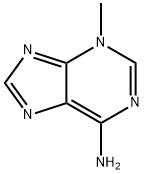
| | Uses | A multi-use inhibitor that protects cerebellar granule cells from apoptosis. | | Uses | A synthetic intermediate and a cell-permeable autophagic sequestration blocker that protects cerebellar granule cells from apoptosis post serum/potassium deprivation | | Definition | ChEBI: A methyladenine that is adenine substituted with a methyl group at position N-3. | | General Description | A widely used cell-permeable autophagic sequestration blocker that effectly protects cerebellar granule cells from apoptosis following serum/potassium deprivation. Although a known class III PI3K inhibitor (IC50 = 4.5 mM in cell-free enzymatic assays), 3-MA exhibits quite distinct pharmacological properties from those of two other PI3K inhibitors, LY 294002 (Cat. Nos. 440202 and 440204) and Wortmannin (Cat. No. 681675) | | Biochem/physiol Actions | 3-Methyladenine (3-MA) is used to inhibit and study the mechanism of autophagy (lysosomal self-degradation) and apoptosis under various conditions. 3-MA inhibits autophagy by blocking autophagosome formation via the inhibition of type III phosphatidylinositol 3-kinases (PI-3K). | | References | 1) Seglen and Gordon?et al.?(1982),?3-Methyladenine: specific inhibitor of autophagic/lysosomal protein degradation in isolated rat hepatocytes; Proc. Natl. Acad. Sci. USA,?79?1889
2) Blommaart?et al. (1997),?The phosphatidylinositol 3-kinase inhibitors wortmannin and LY294002 inhibit autophagy in isolated rat hepatocytes; Eur. J. Biochem.,?243?240
3) McFarland?et al. (2012),?Inhibition of autophagy by 3-methyladenine protects 1321N1 astrocytoma cells against pyocyanin- and 1-hydroxyphenazine-induced toxicity; Arch. Toxicol.,?86?275
4) Zhao?et al. (2014),?Inhibition of autophagy strengthens celastrol-induced apoptosis in human pancreatic cancer in vitro and in vivo models; Curr. Mol. Med.,?14?555 |
| 3-METHYLADENINE Preparation Products And Raw materials |
|


 日本语
 한국어
 Français
 Deutsch
 España
 Türkiye