Other grades of this product :
| N-Acetyl-L-cysteine Basic information |
| N-Acetyl-L-cysteine Chemical Properties |
| Melting point | 106-108 °C(lit.) | | alpha | -35.1 ºC (c=2,H2O) | | Boiling point | 407.7±40.0 °C(Predicted) | | density | 1.249 (estimate) | | vapor pressure | 0Pa at 20℃ | | refractive index | 24 ° (C=JPC Method) | | storage temp. | 2-8°C | | solubility | H2O: 100 mg/mL with heating | | pka | pK1: 9.52 (30°C) | | form | Solid | | color | White | | Water Solubility | Soluble in water, ethanol, methanol, dimethyl sulfoxide, hot isopropyl alcohol, methyl acetate and ethyl acetate. Insoluble in chloroform and ether. | | Merck | 14,88 | | BRN | 1724426 | | Stability: | Stable. Incompatible with strong oxidizing agents. | | InChIKey | PWKSKIMOESPYIA-BYPYZUCNSA-N | | LogP | -0.6 at 23℃ | | CAS DataBase Reference | 616-91-1(CAS DataBase Reference) | | NIST Chemistry Reference | Acetylcysteine(616-91-1) | | EPA Substance Registry System | L-Cysteine, N-acetyl- (616-91-1) |
| N-Acetyl-L-cysteine Usage And Synthesis |
| Description | N-Acetyl-L-cysteine is a kind of membrane penetrating antioxidant. It has anti-inflammatory activity through regulating the activation of NF-κB and HIF-1α as well as modulation of ROS. It can penetrate across the membrane, replenishes intracellular and glutathione and GSH to help the cell fight against oxidative stress. For these reasons, it has the potential for the treatment of neurodegeneration (such as Parkinson’s disease), radiation exposure and other disorders caused by oxidation. Moreover, it can also attenuate the allergic airway diseases. | | Chemical Properties | White crystalline powder with a garlic-like smell and sour taste. Hygroscopic, soluble in water or ethanol, insoluble in ether and chloroform. It is acidic in aqueous solution (pH2-2.75 in 10g/L H2O), mp101-107℃. N-Acetyl-L-cysteine is an N-acetylated derivative of cysteine, which contains a sulfhydryl group in the molecule, which can break the disulfide bond (-S-S-) of the mucin peptide bond, so that the mucin chain becomes a small molecule peptide chain, reducing The viscosity of mucin, so It is a dissolving drug for mucus in mucus, purulent sputum and respiratory tract. | | Originator | Mucomyst ,Mead Johnson,US | | Uses | Paracetamol overdoseIntravenous N-Acetyl-L-cysteine is indicated for the treatment of paracetamol (acetaminophen) overdose. When paracetamol is taken in large quantities, a minor metabolite called N-acetyl-p-benzoquinone imine (NAPQI) accumulates within the body. It is normally conjugated by glutathione, but when taken in excess, the body's glutathione reserves are not sufficient to inactivate the toxic NAPQI. This metabolite is then free to react with key hepatic enzymes, therefore damaging hepatocytes. This may lead to severe liver damage and even death by fulminant liver failure.For this indication, N-Acetyl-L-cysteine acts to augment the glutathione reserves in the body and, together with glutathione, directly bind to toxic metabolites. These actions serve to protect hepatocytes in the liver from NAPQI toxicity.Mucolytic therapyInhaled N-Acetyl-L-cysteine is indicated for mucolytic (""mucusdissolving"") therapy as an adjuvant in respiratory conditions with excessive and / or thick mucus production. Such conditions include emphysema, bronchitis, tuberculosis, bronchiectasis, amyloidosis, pneumonia, cystic fibrosis, chronic obstructive pulmonary disease, and pulmonary fibrosis. It is also used post-operatively, as a diagnostic aid, and in tracheotomy care. It may be considered ineffective in cystic fibrosis.For this indication, N-Acetyl-L-cysteine acts to reduce mucus viscosity by splitting disulfide bonds linking proteins present in the mucus (mucoproteins).Nephroprotective agentOral N-Acetyl-L-cysteine is used for the prevention of radiocontrastinduced nephropathy (a form of acute renal failure). Some studies show that prior administration of N-Acetyl-L-cysteine markedly decreases radiocontrast nephropathy, whereas others appear to cast doubt on its efficacy.Treatment of cyclo phosphamide - induced hemorrhagic cystitisN-Acetyl-L-cysteine has been used for cyclophosphamide-induced hemorrhagic cystitis, although mesna is generally preferred due to the ability of N-Acetyl-L-cysteine to diminish the effectiveness of cyclophosphamide.Microbiological useN-Acetyl-L-cysteine can be used in Petroff's method i.e. liquefaction and decontamination of sputum, in preparation for diagnosis of tuberculosis.Interstitial lung diseaseN-Acetyl-L-cysteine is used in the treatment of interstitial lung disease to prevent disease progression.PsychiatryN-Acetyl-L-cysteine has been shown to reduce the symptoms of both schizophrenia and bipolar disorder in two placebo controlled trials conducted at Melbourne University. It is thought to act via modulation of NMDA glutamate receptors or by increasing glutathione.Poly cystic ovary syndromeIn a small prospective trial comparing N-Acetyl-L-cysteine to metformin (which is the standard drug treatment for PCOS), both treatments resulted in a significant decrease in body mass index, hirsutism score, fasting insulin, HOMA index, free testosterone and menstrual irregularity compared with baseline values, and both treatments had equal efficacy. | | Uses | A metabolite of Methyl Isocyanate.N-Acetyl-L-cysteine, by itself a poor scavenger of oxidants, is converted inside cells to yield sulfane sulfur species, which are very potent scavengers of oxidants. | | Uses | An antioxidant mucolytic acetylated amino acid.
N-acetyl-l-cysteine (NAC) is a derivative of the dietary amino acid l-cysteine. NAC has a high affinity for lung tissue, which it supports through mucolytic and antioxidant action. NAC also enhances glutathione production and plays a role in heavy metal detoxification.
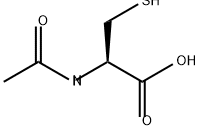
| | Uses | n-acetyl-l-cysteine is a skin conditioner. It may also be used as an anti-aging ingredient given a demonstrated ability to regulate skin atrophy and reduce the appearance of fine lines and wrinkles. | | Definition | ChEBI: N-Acetyl-L-cysteine is an N-acetyl-L-amino acid that is the N-acetylated derivative of the natural amino acid L-cysteine. It is a pharma ceutical drug and nutritional supplement used primarily as a mucolytic agent and in the management of paracetamol (acetaminophen) overdose. Other uses include sulfate repletion in conditions, such as autism, where cysteine and related sulfur amino acids may be depleted. | | Manufacturing Process | To a suspension of 35.2 grams (0.2 mol) of L-cysteine hydrochloride
monohydrate stirred in a reaction vessel containing 87 ml of 91% aqueous
tetrahydrofuran under a nitrogen atmosphere there is added 54.4 grams (0.4
mol) of sodium acetate trihydrate. The mixture is stirred for 20 minutes at
room temperature to insure neutralization of the hydrochloride salt resulting in
the formation of a suspension of equimolar amounts of cysteine and sodium
acetate.
The mixture is then chilled to 3-6°C by external cooling and 20 ml (20.8
grams, 0.21 mol) of acetic anhydride is added thereto in dropwise fashion
with cooling in the above range. The resulting mobile suspension is stirred for
6 hours at room temperature, allowed to stand overnight, and finally heated
at reflux (72°C) for 4 hours. The resulting suspension of sodium N-acetyl-Lcysteinate
is then neutralized by treatment at 5-10°C with 8 grams of
hydrogen chloride. Resulting sodium chloride is removed by filtration and the
product is isolated by distilling the solvent from the filtrate in vacuum and
crystallizing the residue from 35 ml of water, yield 26.3 grams (80.6%) of Nacetylcysteine
as a white solid, MP 109-110°C. | | Brand name | Acetadote
(Cumberland); Mucomyst (Apothecon); Mucosil (Dey). | | Therapeutic Function | Expectorant | | General Description | N-Acetyl-L-cysteine is the N-acetyl derivative of the amino acid Lcysteine, and is a precursor in the formation of the antioxidant glutathione in the body. The thiol (sulfhydryl) group confers antioxidant effects and is able to reduce free radicals. This compound is sold as a dietary supplement commonly claiming antioxidant and liver protecting effects. It is used as a cough medicine because it breaks disulfide bonds in mucus and liquefies it, making it easier to cough up. It is also this action of breaking disulfide bonds that makes it useful in thinning the abnormally thick mucus in cystic and pulmonary fibrosis patients. In India it is marketed by Intas under the trade name 'Efetil'. | | Flammability and Explosibility | Notclassified | | Biochem/physiol Actions | Antioxidant and mucolytic agent. Increases cellular pools of free radical scavengers. Reported to prevent apoptosis in neuronal cells but induce apoptosis in smooth muscle cells. Inhibits HIV replication. May serve as a substrate for microsomal glutathione transferase. | | Mechanism of action | The
final product in an important detoxication sequence for potentially
harmful electrophiles. The initial stage in mercapturic acid biosynthesis
involves conjugation of the electrophile with endogenous
glutathione by the glutathione S-transferases. The glutathione conjugates
are converted in separate steps to the mercapturic acid by
removal of the γ-glutamyl moiety, removal of the glycine moiety
and N-acetylation of the cysteine conjugate. Mercapturic acids are
excreted in either the bile or urine. | | Clinical Use | Treatment of paracetamol overdose
Renal protection during radiological scans involving
contrast media (unlicensed)
Treatment of mucolytic in respiratory disorders | | Side effects | Researchers at the University of Virginia reported in 2007 study using very large doses in a mouse model that acetylcysteine could potentially cause damage to the heart and lungs. They found that acetyl cysteine was metabolized to S-nitroso-N-acetyl cysteine (SNOAC), which increased blood pressure in the lungs and right ventricle of the heart (pulmonary artery hypertension) in mice treated with acetylcysteine. The effect was similar to that observed following a 3-week exposure to an oxygen - deprived environment (chronic hypoxia). The authors also found that SNOAC induced a hypoxia-like response in the expression of several important genes both in vitro and in vivo. The implications of these findings for long-term treatment with acetylcysteine have not yet been investigated. The dose used by Palmer and colleagues was dramatically higher than that used in humans; nonetheless, positive effects on age-diminished control of respiration (the hypoxic ventilatory response) have been observed previously in human subjects at more moderate doses. | | Safety Profile | Poison by intraperitoneal route. Moderately toxic by other routes. Mutation data reported. When heated to decomposition it emits very toxic fumes of NO, and SOx, | | Synthesis | Acetylcysteine, N-acetyl-L-cysteine (23.2.4), is synthesized by reacting
L-cysteine hydrochloride with acetic anhydride in the presence of sodium acetate. | | Veterinary Drugs and Treatments | N-Acetyl-L-cysteine is a mucolytic agent which is also used to stop
the melting effect of collagenases and proteases on the cornea.
N-Acetyl-L-cysteine is useful in halting melting through inhibition of
metalloproteinases, but is not felt to be useful for melting caused
by infectious agents. | | Drug interactions | Potentially hazardous interactions with other drugs
None known | | Environmental Fate | Fatalities from normal doses and overdoses of intravenous
N-Acetyl-L-cysteine have not been reported. This is most probably due to the
fact that the body produces this compound naturally and can
rapidly metabolize it in the liver. Toxicity is usually limited to
anaphylactoid reactions and nausea/vomiting. The average
time for the onset of adverse effects following commencement of the infusion of N-Acetyl-L-cysteine was 30 min (range, 5–70 min). In vivo
and in vitro tests indicate that N-Acetyl-L-cysteine is an inhibitor of allergen
tolerance by inhibition of prostaglandin E synthesis. Adverse
reactions are anaphylactoid in type and have been attributed to
cause histamine release. | | Metabolism | N-Acetyl-L-cysteine undergoes transformation in the liver, and may be present in plasma as the parent compound or as various oxidised metabolites such as N-acetylcystine, N,N-diacetylcystine, and cysteine either free or bound to plasma proteins. Oral bioavailability is low (4-10%). It has been suggested that N-Acetyl-L-cysteine's low oral bioavailability may be due to metabolism in the gut wall and first-pass metabolism in the liver. | | Toxicity evaluation | Because N-Acetyl-L-cysteine is a natural compound that contains no halogen
atoms or substitutions, it would be expected to be easily
metabolized by microorganisms in the environment and thus
not present a risk from the standpoint of persistence or
bioaccumulation. | | Complexing agent | N-Acetyl-L-cysteine has been used to complex palladium, to help it dissolve in water. This helps to remove palladium from drugs or precursors synthesized by palladium-catalyzed coupling reactions. | | Dosage forms | N-Acetyl-L-cysteine is available in different dosage forms for different indications :N-Acetyl-L-cysteine is available in different dosage forms for different indications :Solution for inhalation (Assist,Mucomyst, Mucosil) – inhaled for mucolytic therapy or ingested for nephroprotective effect (to protect the kidneys)IV injection (Assist, Parvolex, Acetadote) – treatment of paracetamol/acetaminophen overdoseOral solution – various indications.Effervescent Tablets (200 mg) - Reolin (Hochland Pharma Germany), Solmucol (600 mg)(IBSA, Switzerland), Cystaline (Thailand), Mucinac (Cipla India), Siran (MegaPharm, Israel / Temmler Pharma, Germany), Amuco200 (Camox Pharmaceuticals, South Africa), ACC200 (Hexal Pharma, South Africa).Ocular solution - for mucolytic therapySachet (600 mg) - Bilim Pharmaceuticals, trebon N (Uni-Pharma Greece)CysNAC (900 mg) – NeuroScience Inc.PharmaNAC Effervescent Tablets (900 mg) - Bioadvantex Pharma.The IV injection and inhalation preparations are, in general, prescription only, whereas the oral solution and the effervescent tablets are available over the counter in many countries. | | Research | The following uses have not been well-established or investigated :N-Acetyl-L-cysteine has been successfully used to aid in the treatment of cannabis dependence in adolescents. N-Acetyl-L-cysteine has had anecdotal reports and some research suggesting efficacy in preventing nail biting.N-Acetyl-L-cysteine is being tested in a double blind trial in Systemic Lupus Erythematosus. The objective is to correct mitochondrial dysfunction.N-Acetyl-L-cysteine has been shown to reduce cravings associated with chronic cocaine use in a study conducted at the Medical University of South Carolina.It may reduce the incidence of chronic obstructive pulmonary disease (COPD) exacerbations. In the treatment of AIDS, N-Acetyl-L-cysteine has been shown to cause a "marked increase in immunological functions and plasma albumin concentrations". | | References | http://www.sigmaaldrich.com/catalog/product/sigma/a0737?lang=en®ion=US
Grinberg, L, et al. "N-acetylcysteine amide, a novel cell-permeating thiol, restores cellular glutathione and protects human red blood cells from oxidative stress." Free Radical Biology & Medicine 38.1(2005):136-145.
Zhang, Xinsheng, et al. "N-Acetylcysteine Amide Protects Against Methamphetamine-Induced Oxidative Stress and Neurotoxicity in Immortalized Human Brain Endothelial Cells." Brain Research1275(2009):87-95.
Penugonda, S, et al. "Effects of N-acetylcysteine amide (NACA), a novel thiol antioxidant against glutamate-induced cytotoxicity in neuronal cell line PC12."Brain Research 1056.2(2005):132.
Lee, Kyung Sun, et al. "A novel thiol compound, N-acetylcysteine amide, attenuates allergic airway disease by regulating activation of NF-|[kappa]|B and hypoxia-inducible factor-1|[alpha]|." Experimental & Molecular Medicine 39.6(2007):756.
|
| N-Acetyl-L-cysteine Preparation Products And Raw materials |
|


 日本语
日本语 한국어
한국어 Français
 Deutsch
 España
 Türkiye