| Description | Lamotrigine is a second- generation antiepileptic drug (AED) known by the proprietary brand name of Lamictal® (GlaxoSmithKline, Brentford) in the UK and USA. |
| Generic formulation | MHRA/ CHM advice to minimize risk when switching patients with epilepsy between different manufacturers’ products (including generic products): |
| Indications | Epilepsy: monotherapy and adjunctive therapy of focal and generalized seizures.Recommendations summarized from NICE (2012)Seizure types: first line (generalized tonic- clonic seizures, tonic/ atonic seizures, absence seizures, focal seizures), adjunctive (generalized tonicclonic seizures, absence seizures, focal seizures). Epilepsy types: first line (absence syndromes, juvenile myoclonic epilepsy, epilepsy with generalized tonic- clonic seizures only, idiopathic generalized epilepsy, benign epilepsy with centrotemporal spikes, Panayiotopoulos syndrome, late-onset childhood occipital epilepsy), adjunctive (absence syndromes, juvenile myoclonic epilepsy, epilepsy with generalized tonic- clonic seizures only, idiopathic generalized epilepsy, benign epilepsy with centrotemporal spikes, Panayiotopoulos syndrome, late- onset childhood occipital epilepsy, Lennox- Gastaut syndrome), contraindicated (Dravet syndrome) Psychiatry: prevention of depressive episodes associated with bipolar disorder (not indicated for manic phase)
|
| Dose titration | Epilepsy— monotherapy25 mg od for 14 days, 50 mg od for 14 days, then increased to a maximum of 100 mg every 7– 14 days; usual maintenance 100– 200 mg daily, divided into 1– 2 doses (max. 500 mg daily).Epilepsy— adjunctive therapy (with valproate)25 mg on alternate days for 14 days, 25 mg od for 14 days, then increased by a maximum of 50 mg every 7– 14 days; usual maintenance 100– 200 mg daily, divided into 1– 2 doses (max. 500 mg daily).Epilepsy— adjunctive therapy (with enzyme- inducing AED and without valproate)50 mg od for 14 days, 50 mg bd for 14 days, then increased by a maximum of 100 mg every 7– 14 days; usual maintenance 200– 400 mg daily, divided into two doses (max. 700 mg daily).Epilepsy— adjunctive therapy (without enzyme- inducing AED and without valproate)25 mg od for 14 days, 50 mg od for 14 days, then increased by a maximum of 100 mg every 7– 14 days; usual maintenance 100– 200 mg daily, divided into 1 or 2 doses.
Bipolar disorder— monotherapy or adjunctive therapy (without enzyme- inducing AED and without valproate)
25 mg od for 14 days, 50 mg daily, divided into 1 or 2 doses for 14 days, 100 mg daily, divided into 1 or 2 doses for 7 days; usual maintenance 200 mg daily, divided into 1 or 2 doses (max. 400 mg daily).Bipolar disorder— adjunctive therapy (with valproate)25 mg on alternate days for 14 days, 25 mg od for 14 days, 50 mg daily, divided into 1 or 2 doses; usual maintenance 100 mg daily, divided into 1 or 2 doses (max. 200 mg daily).Bipolar disorder— adjunctive therapy (with enzyme- inducing AED and without valproate)50 mg od for 14 days, 50 mg bd for 14 days, 100 mg bd for 7 days; 150 mg bd for 7 days; usual maintenance 200 mg bd.
If stopping lamotrigine, patients with epilepsy need to reduce the dose gradually over about 2 weeks to minimize the risk of relapse. This does not apply to patients who take lamotrigine for bipolar disorder, although NICE (2015) recommend that it be reduced gradually over at least 4 weeks to minimize the risk of relapse. |
| Plasma levels monitoring | Although plasma levels can be measured, and a therapeutic range has been postulated (2.5– 15 mg/ L), there is only a loose relationship between serum concentration and clinical effectiveness/ adverse effects. The routine measurement of plasma levels in clinical practice is therefore unnecessary, although it can sometimes be useful in guiding dosage adjustments in situations associated with changes in lamotrigine pharmacokinetics, such as pregnancy, puerperium, and polymedication. |
| Cautions | Patients with a history of allergy or rash from other AEDs. Patients with Parkinson disease. Patients with myoclonic seizures.
|
| Interactions | With AEDsPlasma concentration of lamotrigine is increased by the glucuronidation inhibitor valproate (reduce lamotrigine dose to avoid increased risk of toxicity). Plasma concentration of lamotrigine is reduced by the glucuronidation inducers carbamazepine, phenytoin, phenobarbital and primidone. Lamotrigine can raise concentration of active metabolite of carbamazepine (conflicting evidence).
With other drugsPlasma concentration of lamotrigine is reduced by the glucuronidation inducers oestrogens, rifampicin, and ritonavir (consider increasing the dose of lamotrigine). Plasma concentration of lamotrigine is possibly increased by desogestrel.
With alcohol/foodThere are no known specific interactions between alcohol and lamotrigine, and there are no specific foods that must be excluded from diet when taking lamotrigine. |
| Special populations | Hepatic impairmentRenal impairmentReduce maintenance dose in significant impairment.PregnancyA large amount of data on pregnant women exposed to lamotrigine during the first trimester of pregnancy do not suggest a substantial increase in the teratogenity risk. However, if therapy with lamotrigine is considered necessary during pregnancy, the lowest possible therapeutic dose is recommended. Lamotrigine doses may need to be doubled during pregnancy, as its plasma clearance can greatly increase towards the end of pregnancy (dose adjustments made in pregnancy should be rapidly reversed in the few days after delivery). Should a woman on lamotrigine decide to breastfeed, the infant should be monitored for possible adverse effects, as lamotrigine can be excreted in considerable amounts in breastmilk. In combination with slow infantile elimination can result in plasma concentrations at which pharmacological effects occur.
|
| Behavioural and cognitive effects in patients with epilepsy | Lamotrigine is characterized by an overall positive psychotropic profile, especially in terms of antidepressant properties. There are mixed findings about its possible effects on anxiety symptoms. The main adverse behavioural effects include irritability, agitation, and aggression (especially in patients with learning disability). However, these are not very common. There is no evidence of a significantly increased risk of thought disorders or cognitive deficits (at least at commonly used therapeutic doses). Positive effects on cognitive functions seem to be associated with EEG changes, rather than enhanced cognition. |
| Psychiatric use | The use of lamotrigine for the treatment of behavioural symptoms emerged from the observation of mood improvement in patients taking this medication for partial epilepsy. The main use of lamotrigine in psychiatry settings is for the maintenance therapy of bipolar disorder (prevention of depressive episodes), for which there is an approved indication from both FDA and EMA. There is evidence of a modest benefit in acute bipolar depression and unipolar depression (especially in more severely depressed patients). Reassuring data show no increased risk for switch- over placebo, indicating that lamotrigine is a reasonable choice for the treatment of acute bipolar depression in patients already on mood stabilizers, including those who have demonstrated adverse effects, such as switching on commonly used antidepressants. Other off- label uses have been investigated with preliminary positive results in borderline personality disorder (anger, affective lability, impulsivity), whereas supportive evidence is limited for use in obsessive- compulsive disorder (augmentation therapy), post- traumatic stress disorder, schizophrenia, schizoaffective disorder, alcohol and opiate withdrawal, cocaine dependence, behavioural, and psychological symptoms of dementia. |
| Description | Lamotrigine is a new mazine, glutamate inhibitor anticonvulsant that significantly
reduces the incidence of refractory partial seizures. The drug is reported to produce
fewer CNS side effects than diazepam or sodium phenytoin. It is also indicated as
add-on therapy for the treatment of generalized seizures not satisfactorily controlled by other anti-epileptics. |
| Chemical Properties | White to Cream Coloured Powder |
| Originator | Burroughs Wellcome (United Kingdom) |
| Uses | Lamotrigine is an anticonvulsant. Inhibits glutamate release, possible through inhibition of Sodium, Potassium and Calcium currents. Used in treatment of bipolar depression. |
| Uses | For the adjunctive treatment of partial seizures in epilepsy and generalized seizures of Lennox-Gastaut syndrome. Also for the maintenance treatment of bipolar I disorder and depression. |
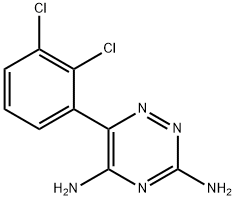
| Definition | ChEBI: Lamotrigine is a member of the class of 1,2,4-triazines in which the triazene skeleton is substituted by amino groups at positions 3 and 5, and by a 2,3-dichlorophenyl group at position 6. It has a role as an anticonvulsant, an antimanic drug, an antidepressant, a non-narcotic analgesic, a calcium channel blocker, an excitatory amino acid antagonist, an EC 3.4.21.26 (prolyl oligopeptidase) inhibitor, an environmental contaminant, a xenobiotic and a geroprotector. It is a member of 1,2,4-triazines, a primary arylamine and a dichlorobenzene. |
| Manufacturing Process | A mixture of 2,3-dichlorophenylglyoxylamide (54.5 g, 0.25 mol),
aminoguanidine hydrochloride (33.15 g, 0.30 mol), ethanol (1 liter) and
concentrated hydrochloric acid (4 ml) were heated under reflux for 6 hours at
pH 1.5. The resulting solution was evaporated to dryness, the solid was
dissolved in water (2 L; resulting pH 2.5) and the solution was basified to pH
13 by the addition of 50% aqueous sodium hydroxide (45 ml) at <15°C. The
mixture was filtered, the solid washed with 0.88 N ammonia solution and
dried to give (E)-2-(2',3'-dichlorophenyl)-2-(guanidinylimino)acetamide (59.5
g, 87%) m.p. 231-233°C. Recrystallisation of this product (2.2 g) from npropanol (60 ml) afforded pure material (1.83 g, 83%), m.p. 238-239°C
(decomp.).(E)-2-(2',3'-dichlorophenyl)-2-(guanidinylimino)acetamide (0.3 g) was
dissolved in ethanol (10 ml) and was irradiated by exposure to sunlight. After
5 days 6-(2,3-dichlorophenyl)-1,2,4-triazine-3,5-diamine (Lamotrigine) was
detected by TLC in the liquor material. Melting point of lamotrigine 218°C. |
| Brand name | Lamictal (Glax oSmithKline). |
| Therapeutic Function | Anticonvulsant |
| World Health Organization (WHO) | Lamotrigine is a relatively new antiepilepsy agent acting through
stabilization of neuronal membranes and preventing liberation of neurotransmitters. |
| Biological Functions | Lamotrigine has a broad spectrum of action and is effective
in generalized and partial epilepsies. Its primary
mechanism of action appears to be blockage of voltagedependent
sodium channels, although its effectiveness
against absence seizures indicates that additional mechanisms
may be active. Lamotrigine is almost completely absorbed from the gastrointestinal tract, and peak
plasma levels are achieved in about 2 to 5 hours. The
plasma half-life after a single dose is about 24 hours.
Unlike most drugs, lamotrigine is metabolized primarily
by glucuronidation. Therefore, it appears likely that
lamotrigine will not induce or inhibit cytochrome P450
isozymes, in contrast to most AEDs.
Severe skin rashes appear to be the major concern
with lamotrigine use.The incidence of rash is greater in
children than in adults.Other adverse effects are similar
to those of drugs with the same mechanism of action,
such as cerebellovestibular changes leading to dizziness,
diplopia, ataxia, and blurred vision. Disseminated intravascular
coagulation has been reported. |
| General Description | Lamotrigine, an AED of the phenyltriazine class, has beenfound effective against refractory partial seizures. Likephenytoin and CBZ, its main mechanism of action appears tobe blockade of sodium channels that is both voltage- and usedependent.It also inhibits the high-threshold calcium channel,possibly through inhibition of presynaptic N-type calciumchannels and also blocks glutamate release.Lamotrigine is metabolized predominantly by glucuronidation.The major inactive urinary metabolites isolated are 2-Nglucuronide(76%) and 5-N-glucuronide (10%) because thearomatic ring is somewhat deactivated by the presence ofchlorine atoms toward arene oxide formation.Coadministration of lamotrigine with valproate, however,greatly increases the incidence of its idiosyncratic reactions.It is conceivable that in the presence of VPA, an inhibitor ofUDP-glucuronyl transferase, the concentration of the reactivearene oxide intermediate may be increased because of the reducedcapacity of UDP-glucuronyl transferase to metabolizelamotrigine via normal glucuronidation pathways. |
| Biological Activity | Anticonvulsant. Inhibits glutamate release, possibly through inhibition of Na + , K + and Ca 2+ currents. |
| Biochem/physiol Actions | Anticonvulsant. |
| Mechanism of action | The most probable explanation for lamotrigine's efficacy is its ability to produce a blockade of sodium channel repetitive firing.
In addition, lamotrigine appears to reduce glutaminergic excitatory transmission, although the mechanism for this action
remains unclear. |
| Pharmacokinetics | Following oral administration, lamotrigine is absorbed rapidly and completely, exhibiting linear pharmacokinetics and modest
protein binding (55%). Lamotrigine is metabolized predominantly by N-glucuronidation and subsequent urinary elimination of its
major metabolite, the quaternary 2-N-glucuronide (80–90%), the minor 5-amino-N-glucuronide (8–10%), and unchanged drug
(8–10%). Lamotrigine's usual elimination half-life of 24–35 hours is reduced to 13–15 hours in patients taking enzymeinducing AEDs. The presence of valproate increases the lamotrigine half-life substantially by inhibiting N-glucuronidation,
necessitating a reduction in dose to avoid toxicity. Hepatic disease patients may demonstrate a reduced capacity to for
lamotrigine glucuronidation, thus reducing its rate of clearance. |
| Clinical Use | Lamotrigine is a 5-phenyl-1,2,4-triazine derivative indicated as monotherapy or as an adjunct for partial seizures in adults, as
adjunct in patients with Lennox-Gastaut syndrome, and as adjunct for partial seizures in children 2 years of age and older.
Lamotrigine may have additional benefit in combating myoclonic and typical absence seizures. It is approved for use in the
maintenance treatment of bipolar disorder. |
| Side effects | The usefulness of lamotrigine is limited by the increased incidence of serious rashes, particularly in children or patients taking
valproate. This increase, however, may be attenuated by very slow dose escalation, because most rashes appear within
the first 8 weeks of treatment. The drug should be discontinued if a rash appears at any time. Additionally, lamotrigine may be
associated with development of myoclonus after 2 to 3 years of drug treatment. Additional common side effects associated
with lamotrigine therapy include dizziness, diplopia, headache, ataxia, blurred vision, somnolence, and nausea. |
| Drug interactions | Potentially hazardous interactions with other drugs
Antibacterials: concentration reduced by rifampicin.
Antidepressants: antagonism of anticonvulsant
effect; avoid with St John’s wort.
Antiepileptics: concentration reduced by
carbamazepine, phenobarbital and phenytoin, also
possibility of increased concentration of active
carbamazepine metabolite; concentration increased
by valproate - reduce lamotrigine dose.
Antimalarials: mefloquine antagonises
anticonvulsant effect
Antipsychotics: anticonvulsant effect antagonised.
Oestrogens and progestogens: concentration of
lamotrigine reduced and the dose may need to
be increased by as much as 2-fold; may affect
contraceptive effect.
Orlistat: possibly increased risk of convulsions |
| Metabolism | Potentially hazardous interactions with other drugs
Antibacterials: concentration reduced by rifampicin.
Antidepressants: antagonism of anticonvulsant
effect; avoid with St John’s wort.
Antiepileptics: concentration reduced by
carbamazepine, phenobarbital and phenytoin, also
possibility of increased concentration of active
carbamazepine metabolite; concentration increased
by valproate - reduce lamotrigine dose.
Antimalarials: mefloquine antagonises
anticonvulsant effect
Antipsychotics: anticonvulsant effect antagonised.
Oestrogens and progestogens: concentration of
lamotrigine reduced and the dose may need to
be increased by as much as 2-fold; may affect
contraceptive effect.
Orlistat: possibly increased risk of convulsions |


 日本语
日本语 한국어
한국어 Français
 Deutsch
 España
 Türkiye