Other grades of this product :
| N-Benzoylaminopurine Basic information |
| N-Benzoylaminopurine Chemical Properties |
| Melting point | 242-244°C | | density | 1.494 g/cm3 | | storage temp. | 2-8°C | | Water Solubility | Insoluble in water | | pka | 11.98±0.20(Predicted) | | form | powder to crystal | | color | White to Almost white | | BRN | 20585 | | CAS DataBase Reference | 4005-49-6(CAS DataBase Reference) |
| Hazard Codes | Xn,Xi | | Risk Statements | 22-43 | | Safety Statements | 36/37 | | WGK Germany | 3 | | Hazard Note | Irritant | | HS Code | 29335990 |
| N-Benzoylaminopurine Usage And Synthesis |
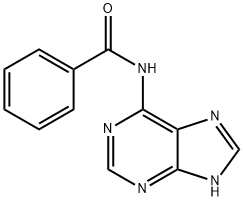
| Chemical Properties | White solid | | Uses | N-Benzoylaminopurine is used in the organic synthesis of adenine derivative molecules such as bicyclic adenine nucleoside via a condensation reaction between L-threo-pentofuranose derivative 1 and 6-N-benzoyladenine and to produce oxy-peptide nucleic acids.
| | Uses | N6-Benzoyladenine is used in the organic synthesis of adenine derivative molecules such as bicyclic adenine nucleoside via a condensation reaction between L-threo-pentofuranose derivative 1 and 6-N-benzoyladenine and to produce oxy-peptide nucleic acids. | | Biochem/physiol Actions | N6-Benzoyladenine comprises of adenine moiety and is a potent inhibitor of bromodomain-containing protein 4 (BRD4). N6-Benzoyladenine modulates tumor necrosis factor α (TNF-α) levels. It elicits cytotoxicity in liver and ileum cancer cells and may serve as a potential candidate agent for cancer chemotherapy. |
| N-Benzoylaminopurine Preparation Products And Raw materials |
|


 日本语
日本语 한국어
한국어 Français
 Deutsch
 España
 Türkiye