Other grades of this product :
| DL-Propargylglycine Basic information |
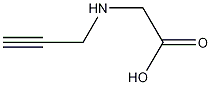
| Product Name: | DL-Propargylglycine | | Synonyms: | 2-Aminopent-4-ynoic acid hydrochloride;DL-2-Propynylglycine hydrochloride;2-Amino-4-pentynoic acid hydrochloride;2-amino-4-pentynoic Acid Hydrochloride (1:1);DL-Propargylglycine HCl | | CAS: | 16900-57-5 | | MF: | C5H7NO2 | | MW: | 113.11458 | | EINECS: | | Product Categories: | | Mol File: | 16900-57-5.mol |
| DL-Propargylglycine Chemical Properties |
| storage temp. | Inert atmosphere,Room Temperature |
| DL-Propargylglycine Usage And Synthesis |
| Description | Hydrogen sulphide (H2S), a naturally occurring gasotransmitter, is a potent vasodilator and pro-inflammatory mediator. DL-Propargyl glycine (PAG) is an irreversible inhibitor of the H2S synthesizing enzyme cystathionine-γ-lyase (CSE). PAG blocks H2S synthesis activity in rat liver preparations with an IC50 value of 55 μM and abolishes the rise in plasma H2S in anaesthetized rats induced with hemorrhagic shock. At concentrations ranging from 25-100 mg/kg, PAG can reduce H2S-associated inflammation in rodent models of pancreatitis, oedema, and endotoxemia. | | Uses | DL-Propargylglycine Hydrochloride is used in preparation of tert-Butoxycarbonyl Azide. |
| DL-Propargylglycine Preparation Products And Raw materials |
|


 日本语
日本语 한국어
한국어 Français
 Deutsch
 España
 Türkiye