Other grades of this product :
| Sodium edetate Basic information |
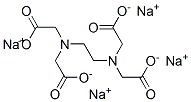
| Product Name: | Sodium edetate | | Synonyms: | ETHYLENEDIAMINETETRAACETIC ACID TETRASOD IUM SALT PURE;ETHYLENEDIAMINETETRAACETIC ACID TETRA-SO DIUM SALT TETRAH.;EDTA.Na4.2H2O;Ethylenediaminetetraaceticacid,tetrasodiumsaltdihydrate,99+%;Ethylenediamine-N,N,N',N'-tetraaceticacid,tetrasodiumsalt,tetrahydrate;ETHYLENEDIAMINETETRAACETICACIDTETRASODIUMSALT,REAGENT;ETHYLENEDINITRILOTETRACETICACIDTETRASODIUMSALT;ETHYLENE-DIAMINO-TETRA-ACETIC-ACID-TETRA-SODIUMSALT | | CAS: | 64-02-8 | | MF: | C10H12N2Na4O8 | | MW: | 380.17 | | EINECS: | 200-573-9 | | Product Categories: | chelating agaent;EDTA | | Mol File: | 64-02-8.mol |
| Sodium edetate Chemical Properties |
| Sodium edetate Usage And Synthesis |
| Chemical Properties | White powder. Freely soluble in water. | | Chemical Properties | Tetrasodium EDTA is a white crystalline solid. | | Uses | General-purpose chelating agent. | | Potential Exposure | Used therapeutically in treating arteriosclerosis. Used as a metal cleaner; in detergents, liquid soaps; shampoos; metal chelating agent; in textiles industry to improve dyeing, scouring, and detergent operations; antioxidant. | | Shipping | UN3077 Environmentally hazardous substances, solid, n.o.s., Hazard class: 9; Labels: 9-Miscellaneous hazardous material, Technical Name Required. | | Incompatibilities | Compounds of the carboxyl group react with all bases, both inorganic and organic (i.e., amines) releasing substantial heat, water and a salt that may be harmful. Incompatible with arsenic compounds (releases hydrogen cyanide gas), diazo compounds, dithiocarbamates, isocyanates, mercaptans, nitrides, and sulfides (releasing heat, toxic and possibly flammable gases), thiosulfates and dithionites (releasing hydrogen sulfate and oxides of sulfur). Incompatible with oxidizers (chlorates, nitrates, peroxides, permanganates, perchlorates, chlorine, bromine, fluorine, etc.); contact may cause fires or explosions. Keep away from alkaline materials, strong bases, strong acids, oxoacids, epoxides. Can solubilize metals | | Waste Disposal | It is inappropriate and possibly dangerous to the environment to dispose of expired or waste drugs and pharmaceuticals by flushing them down the toilet or discarding them to the trash. Household quantities of expired or waste pharmaceuticals may be mixed with wet cat litter or coffee grounds, double-bagged in plastic, discard in trash. Larger quantities shall carefully take into consideration applicable DEA, EPA, and FDA regulations. If possible return the pharmaceutical to the manufacturer for proper disposal being careful to properly lab el and securely package the material. Alternatively, the waste pharmaceutical shall be labeled, securely packaged and transported by a state licensed medical waste contractor to dispose by burial in a licensed hazardous or toxic waste landfill or incinerator |
| Sodium edetate Preparation Products And Raw materials |
|


 日本语
日本语 한국어
한국어 Français
 Deutsch
 España
 Türkiye