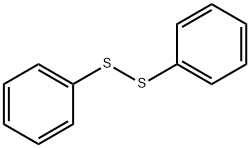
| melting point | 58-60 °C (lit.) |
| boiling point | 191-192 °C (15 mmHg) |
| density | 1.353 |
| FEMA | 3225 | PHENYL DISULFIDE |
| Refractive index | 1,441-1,444 |
| flash point | 310°C |
| Storage conditions | Sealed in dry,Room Temperature |
| solubility | xylene: soluble3%, clear, colorless to yellow |
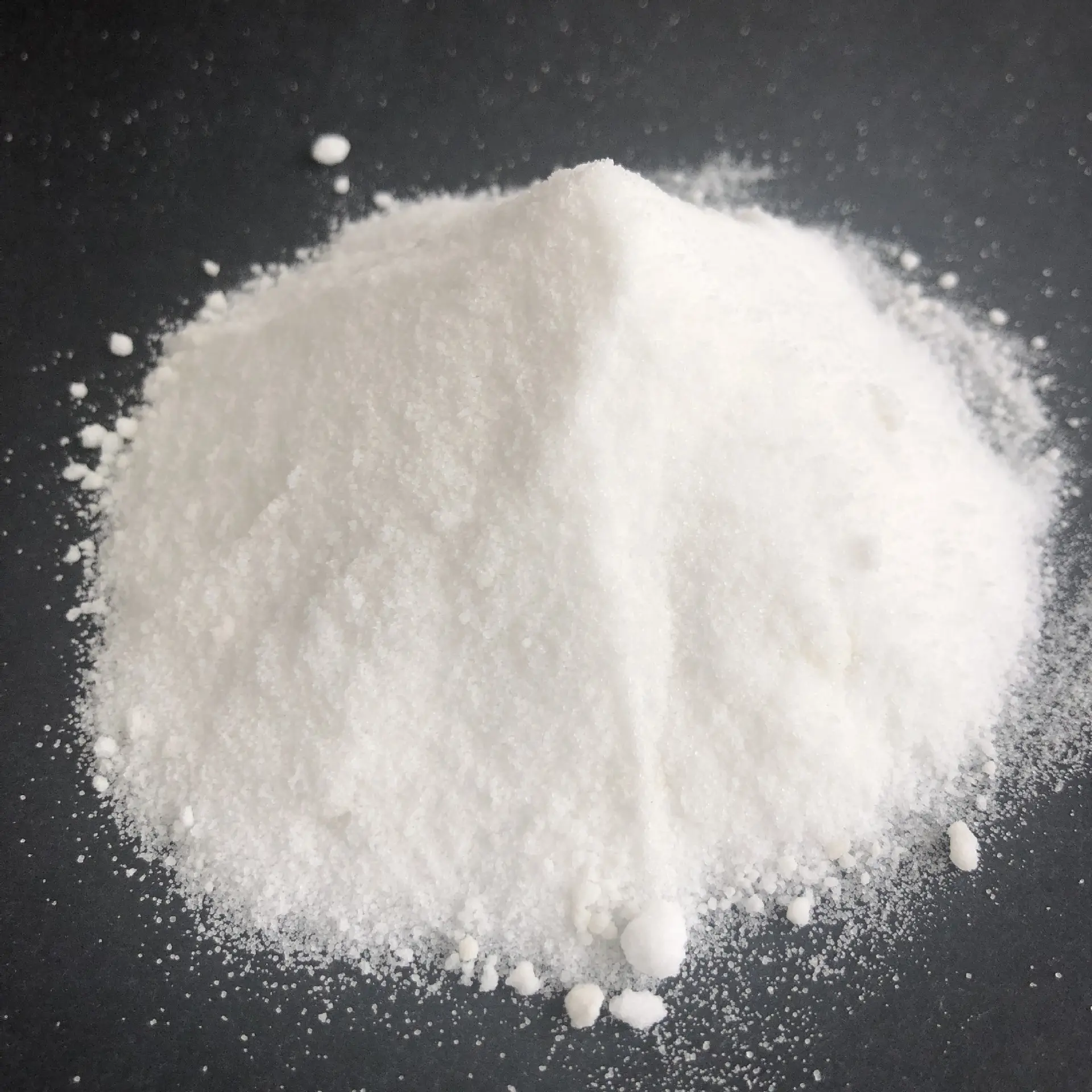
| form | Crystalline Solid |
| colour | White to off-white |
| proportion | 1.353 |
| Water solubility | Insoluble in water. |
| JECFA Number | 578 |
| BRN | 639794 |
| stability | Stable. Incompatible with strong oxidizing agents, strong bases. |
| InChIKey | GUUVPOWQJOLRAS-UHFFFAOYSA-N |
| CAS | 882-33-7 |
| EPA Chemical Information | Diphenyl disulfide (882-33-7) |
| NIST Chemical information | Disulfide, diphenyl(882-33-7) |
Diphenyl disulfide is a colorless crystalline material with the formula (C6H5S)2 and often abbreviated Ph2S2. It is most commonly utilized as a reagent for integration of a phenylthio functionality into molecules. The phenylthio group in the compound has a useful function due to the numerous of reaction that it can facilitate in organic chemistry. Phenysulfides, for instance, undergo oxidative elimination, producing alkenes under relatively mild, normal conditions. Also phenyl sulfides can serve as a source of carbon-centered radicals in radical reactions.
Diphenyl disulfide is usually synthesized by the oxidation of thiophenol:
2 PhSH + I2 → Ph2S2 + 2 HI
Please leave a message for us or use the following ways to contact us, we will reply to you as soon as possible, and provide you with the most sincere service, thank you.


 日本语
日本语 한국어
한국어 Français
 Deutsch
 España
 Türkiye