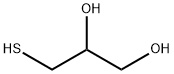
| melting point | <25 °C |
| boiling point | 118 °C5 mm Hg(lit.) |
| density | 1.25 g/mL at 25 °C(lit.) |
| Vapor pressure | <1 hPa (20 °C) |
| Refractive index | n20/D 1.527(lit.) |
| flash point | >230 °F |
| Storage conditions | 2-8°C |
| solubility | absolute ethanol: 1 mL/mL |
| pka | pK1:9.43 (25°C,μ=0.5) |
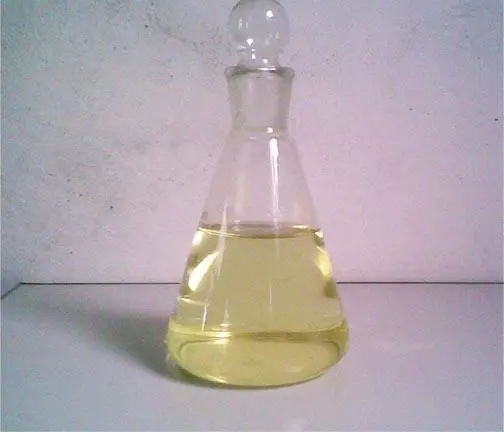
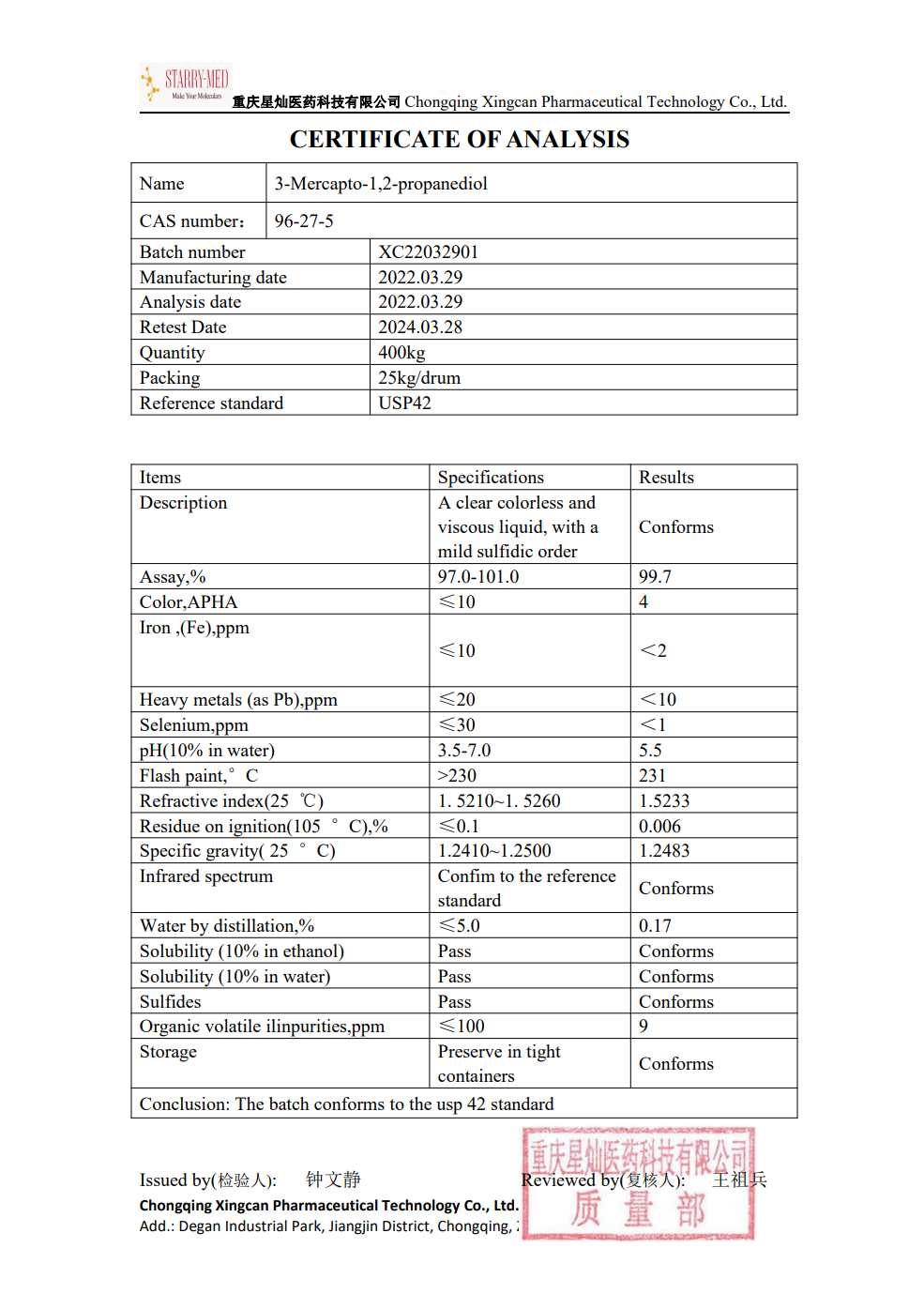
| form | Liquid |
| colour | Clear colorless to yellow |
| Odor | Stench odour |
| PH | 3.5-7.0 |
| Water solubility | slightly soluble |
| susceptibility | Air Sensitive & Hygroscopic |
| Merck | 14,9335 |
| BRN | 1732046 |
| InChIKey | PJUIMOJAAPLTRJ-UHFFFAOYSA-N |
| CAS | 96-27-5 |
| EPA Chemical Information | 1,2-Propanediol, 3-mercapto- (96-27-5) |
| NIST Chemical information | Monothioglycerol(96-27-5) |
1-Thioglycerol is a reagent used in fluorescence, spectroscopy, and microbiology techniques. Varying the concentration of 1-thioglycerol in the preparation of CdSe/CdS core-shell ultrasmall quantum dots (CS-USQDs) allows a precise way to control the size of the shell, with shell size increasing with increased concentration. It is used as a capping agent in the synthesis of nanocrystals analyzed via Raman and UV/Vis spectroscopy. Biologically, 1-thioglycerol stimulates porphyrin synthesis and increases glutamyl-tRNA reductase activity in E. coli grown in an aerobic environment. It was previously a component in hair permanents used to produce waves or curls
Please leave a message for us or use the following ways to contact us, we will reply to you as soon as possible, and provide you with the most sincere service, thank you.


 日本语
日本语 한국어
한국어 Français
 Deutsch
 España
 Türkiye