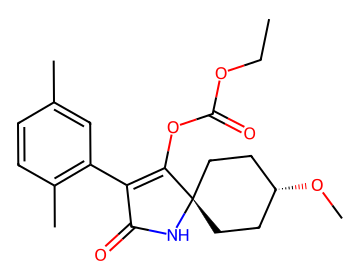
Spirotetramat (BY-108330) is an orally active Insecticide and lipid biosynthesis inhibitor. Spirotetramat regulates the activities of superoxide dismutase ( SOD ) and glutathione peroxidase ( GSH-Px ), with short-term exposure increasing their activities and long-term exposure altering their activities. Spirotetramat induces the activity and mRNA expression of carboxylesterase ( CarE ). Spirotetramat induces oxidative stress and lipid peroxidation in tadpoles. Spirotetramat is toxic to amphibian tadpoles and exhibits sublethal/non-lethal toxicity to amphibians. Spirotetramat causes death in immature psyllids, aphids, scale insects, mealybugs, whiteflies and thrips, and shows a high lethal rate against Cacopsylla pyri nymphs. Spirotetramat reduces the fecundity of Aphis gossypii . Spirotetramat induces tolerance in the offspring of exposed Aphis gossypii , and acts on Myzus persicae , Bemisia tabaci and Tetranychus urticae .
Products | Products > Disease Areas > Infection | Products > Disease Areas > Metabolic or Endocrine Disease | Products > Disease Areas > Parasitic Infection | Products > Disease Areas > Lipid Metabolism | Products > Signaling Pathways > Others | Products > Signaling Pathways > Immunology/Inflammation | Products > Signaling Pathways > Metabolic Enzyme/Protease | Products > Signaling Pathways > Apoptosis | Products > Research Areas > Metabolic Disease | Products > Research Areas > Infection | Products > Signaling Pathways > Carboxylesterase (CES) | Products > Signaling Pathways > Environmental Pollutants | Products > Signaling Pathways > Insecticide | Products > Signaling Pathways > SOD | Products > Signaling Pathways > Glutathione Peroxidase
Please leave a message for us or use the following ways to contact us, we will reply to you as soon as possible, and provide you with the most sincere service, thank you.


 日本语
日本语 한국어
한국어 Français
 Deutsch
 España
 Türkiye