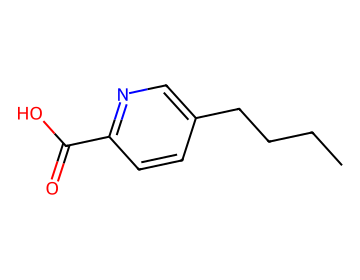
Fusaric acid is an orally active multi-pathway inhibitor with the activity of inducing oxidative stress and apoptosis . Fusaric acid can chelate divalent metal cations, damage mitochondrial membrane structure, and activate apoptosis-related proteases such as Caspase-3/7, -8, and -9 . Fusaric acid also regulates Bax/Bcl-2 protein, inhibits fibrosis-related signaling pathways such as NF-κB , TGF-β 1 /SMADs , and PI3K/AKT/mTOR , and reduces collagen deposition. Fusaric acid is also a dopamine β-hydroxylase inhibitor, which reduces endogenous levels of norepinephrine and epinephrine in the brain, heart, spleen, and adrenal glands. Fusaric acid can play a role in myocardial fibrosis and improve cardiac hypertrophy in heart disease, and can also be used in the study of esophageal cancer and liver cancer .
Products | Products > Disease Areas > Cancer | Products > Disease Areas > Neurological, Eye or Ear Disease | Products > Disease Areas > Inflammation or Immune System Disease | Products > Disease Areas > Blood or Cardio-cerebrovascular Disease | Products > Disease Areas > Metabolic or Endocrine Disease | Products > Disease Areas > Respiratory Disease | Products > Disease Areas > Digestive System Disease | Products > Disease Areas > Urogenital Disease | Products > Disease Areas > Musculoskeletal and Skin Disease | Products > Disease Areas > Neurodegenerative Disease | Products > Disease Areas > Cardiovascular Disease | Products > Disease Areas > Lipid Metabolism | Products > Disease Areas > Pulmonary Disease | Products > Disease Areas > Autoimmune Disease | Products > Disease Areas > Arthritis | Products > Disease Areas > Lung Cancer | Products > Disease Areas > Breast Cancer | Products > Disease Areas > Colorectal Cancer | Products > Disease Areas > Digestive System Cancer | Products > Disease Areas > Prostate Cancer | Products > Disease Areas > Urogenital Cancer | Products > Disease Areas > Gastric Cancer | Products > Disease Areas > Liver Cancer | Products > Disease Areas > Leukemia/Lymphoma/Myeloma | Products > Disease Areas > Blood Disease | Products > Disease Areas > Pancreatic Cancer | Products > Disease Areas > Ovarian Cancer | Products > Disease Areas > Depression | Products > Disease Areas > Pain | Products > Disease Areas > Digestive System Inflammation | Products > Disease Areas > Alzheimer's Disease | Products > Disease Areas > Parkinson's Disease | Products > Disease Areas > Hypertension | Products > Disease Areas > Obesity | Products > Disease Areas > Lung Fibrosis | Products > Disease Areas > Rheumatoid Arthritis | Products > Signaling Pathways > Stem Cell/Wnt | Products > Signaling Pathways > NF-κB | Products > Signaling Pathways > GPCR/G Protein | Products > Signaling Pathways > PI3K/Akt/mTOR | Products > Signaling Pathways > Metabolic Enzyme/Protease | Products > Signaling Pathways > TGF-beta/Smad | Products > Signaling Pathways > Apoptosis | Products > Signaling Pathways > Neuronal Signaling | Products > Research Areas > Endocrinology | Products > Research Areas > Cardiovascular Disease | Products > Research Areas > Cancer | Products > Research Areas > Cancer > Cancer Targeted Therapy | Products > Research Areas > Cancer > Cancer Immunotherapy | Products > Research Areas > Cancer > Cancer Stem Cells | Products > Research Areas > Cancer > Cancer Metabolism and Metastasis | Products > Signaling Pathways > TGF-beta/Smad | Products > Signaling Pathways > Akt | Products > Signaling Pathways > mTOR | Products > Signaling Pathways > NF-κB | Products > Signaling Pathways > Dopamine β-hydroxylase | Products > Signaling Pathways > PI3K | Products > Signaling Pathways > Apoptosis | Products > Signaling Pathways > Adrenergic Receptor
Please leave a message for us or use the following ways to contact us, we will reply to you as soon as possible, and provide you with the most sincere service, thank you.


 日本语
日本语 한국어
한국어 Français
 Deutsch
 España
 Türkiye