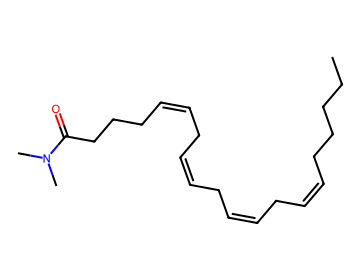
Anandamide (AEA) is an endogenous cannabinoid that binds to both central cannabinoid ( CB1 ) and peripheral cannabinoid ( CB2 ) receptors. The biological actions of AEA are terminated by cellular uptake and hydrolysis of the amide bond by the enzyme fatty acid amide hydrolase. Arachidonoyl-N,N-dimethyl amide is an analog of anandamide that exhibits weak or no binding to the human central cannabinoid ( CB1 ) receptor (Ki >1 μM). It inhibits rat glial gap junction cell-cell communication 100% at a concentration of 50 μM.
Products | Products > Disease Areas > Metabolic or Endocrine Disease | Products > Signaling Pathways > GPCR/G Protein | Products > Signaling Pathways > Neuronal Signaling | Products > Research Areas > Metabolic Disease | Products > Signaling Pathways > Cannabinoid Receptor
Please leave a message for us or use the following ways to contact us, we will reply to you as soon as possible, and provide you with the most sincere service, thank you.


 日本语
日本语 한국어
한국어 Français
 Deutsch
 España
 Türkiye