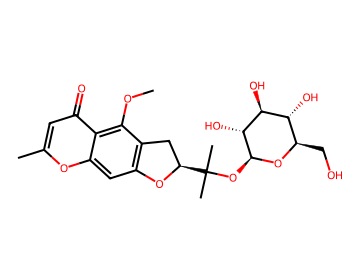
5-O-Methylvisammioside (4'-O-β-D-Glucosyl-5-O-methylvisamminol) is an orally active natural chromone glycoside and multiple biological activities. 5-O-Methylvisammioside inhibits ferroptosis by activating the Nrf2/HO-1 signaling axis. 5-O-Methylvisammioside alleviates intestinal barrier damage by inhibiting the ROS/NF-κB/NLRP3 pathway. 5-O-Methylvisammioside exerts a protective effect against acute liver injury by reducing ALT/AST , decreasing inflammatory infiltration, and inhibiting IκB-α phosphorylation and NF-κB nuclear translocation. 5-O-Methylvisammioside blocks the HMGB1/RAGE/MEK/ERK signaling axis to exert anti-tumor and anti-angiogenic effects. 5-O-Methylvisammioside improves depression-like behaviors by inhibiting Src kinase and the NF-κB pathway.
Products | Products > Disease Areas > Cancer | Products > Disease Areas > Neurological, Eye or Ear Disease | Products > Disease Areas > Inflammation or Immune System Disease | Products > Disease Areas > Metabolic or Endocrine Disease | Products > Disease Areas > Digestive System Disease | Products > Disease Areas > Purine Metabolism | Products > Disease Areas > Autoimmune Disease | Products > Disease Areas > Peptic Ulcer Disease | Products > Disease Areas > Liver Disease | Products > Disease Areas > Liver Cancer | Products > Disease Areas > Digestive System Cancer | Products > Disease Areas > Depression | Products > Disease Areas > Hyperuricemia | Products > Disease Areas > Ulcerative Colitis | Products > Disease Areas > Liver Injury | Products > Signaling Pathways > NF-κB | Products > Signaling Pathways > MAPK/ERK Pathway | Products > Signaling Pathways > Protein Tyrosine Kinase/RTK | Products > Signaling Pathways > Apoptosis | Products > Signaling Pathways > Immunology/Inflammation | Products > Signaling Pathways > Neuronal Signaling | Products > Signaling Pathways > Stem Cell/Wnt | Products > Signaling Pathways > Metabolic Enzyme/Protease | Products > Research Areas > Neurological Disease | Products > Research Areas > Metabolic Disease | Products > Research Areas > Inflammation/Immunology | Products > Research Areas > Cancer | Products > Research Areas > Cancer > Cancer Targeted Therapy | Products > Research Areas > Cancer > Cancer Immunotherapy | Products > Research Areas > Cancer > Cancer Stem Cells | Products > Research Areas > Cancer > Cancer Metabolism and Metastasis | Products > Signaling Pathways > NF-κB | Products > Signaling Pathways > p38 MAPK | Products > Signaling Pathways > JNK | Products > Signaling Pathways > Src | Products > Signaling Pathways > TNF Receptor | Products > Signaling Pathways > NOD-like Receptor (NLR) | Products > Signaling Pathways > Amyloid-β | Products > Signaling Pathways > MEK | Products > Signaling Pathways > ERK | Products > Signaling Pathways > Ferroptosis | Products > Signaling Pathways > VEGFR | Products > Signaling Pathways > Anaplastic lymphoma kinase (ALK) | Products > Signaling Pathways > Reactive Oxygen Species (ROS)
Please leave a message for us or use the following ways to contact us, we will reply to you as soon as possible, and provide you with the most sincere service, thank you.


 日本语
 한국어
 Français
 Deutsch
 España
 Türkiye