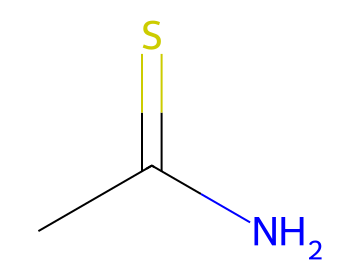
Thioacetamide (TAA) is an indirect hepatotoxin and causes parenchymal cell necrosis. Thioacetamide requires metabolic activation by microsomal CYP2E1 to thioacetamide-S-oxide initially and then to thioacetamide-S-dioxide, which is a highly reactive metabolite, and its reactive metabolites covalently bind to proteins and lipids thereby causing oxidative stress and centrilobular necrosis. Thioacetamide can induce chronic liver fibrosis, encephalopathy and other events model.
Products | Products > Disease Areas > Parkinson's Disease | Products > Disease Areas > Neurological, Eye or Ear Disease | Products > Disease Areas > Inflammation or Immune System Disease | Products > Disease Areas > Cancer | Products > Disease Areas > Digestive System Disease | Products > Disease Areas > Neurodegenerative Disease | Products > Disease Areas > Digestive System Inflammation | Products > Signaling Pathways > Apoptosis | Products > Research Areas > Neurological Disease | Products > Research Areas > Inflammation/Immunology | Products > Research Areas > Cancer | Products > Research Areas > Cancer > Cancer Targeted Therapy | Products > Research Areas > Cancer > Cancer Metabolism and Metastasis | Products > Signaling Pathways > Necroptosis
Please leave a message for us or use the following ways to contact us, we will reply to you as soon as possible, and provide you with the most sincere service, thank you.


 日本语
日本语 한국어
한국어 Français
 Deutsch
 España
 Türkiye