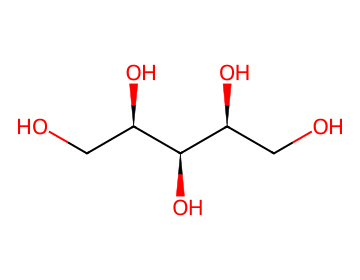
Xylitol can be classified as a polyol and sugar alcohol, exhibiting inhibitory activity on cancer cell proliferation. It induces autophagy ( Autophagy ) and cell death in A549 cells by activating the autophagy signaling pathway, as evidenced by the increased expression of LC3-II and Atg5-Atg12 upon Xylitol treatment. Additionally, Xylitol inhibits acetaldehyde production by Candida species, thereby reducing their carcinogenic potential. In vivo, Xylitol induces alterations in the gut microbiota of mice, which may enhance cholesterol accumulation and upregulate hepatic ChREBP, while also slowing tumor growth in the B16F10 melanoma C57BL/6 mouse model.
Products | Products > Disease Areas > Infection | Products > Disease Areas > Cancer | Products > Disease Areas > Metabolic or Endocrine Disease | Products > Disease Areas > Bacterial Infection | Products > Signaling Pathways > Others | Products > Signaling Pathways > Autophagy | Products > Signaling Pathways > Anti-infection | Products > Signaling Pathways > Metabolic Enzyme/Protease | Products > Research Areas > Metabolic Disease | Products > Research Areas > Cancer | Products > Research Areas > Cancer > Cancer Targeted Therapy | Products > Research Areas > Cancer > Cancer Immunotherapy | Products > Research Areas > Cancer > Cancer Metabolism and Metastasis | Products > Signaling Pathways > Endogenous Metabolite | Products > Signaling Pathways > Atg7 | Products > Signaling Pathways > Environmental Pollutants | Products > Signaling Pathways > Autophagy | Products > Signaling Pathways > Bacterial | Products > Signaling Pathways > Atg8/LC3
感谢您来到爆牛贸易,请为我们留言或者使用以下方式联系我们,我们将尽快给您回复,并为您提供最真诚的服务,谢谢。

 日本语
日本语 한국어
한국어 Français
 Deutsch
 España
 Türkiye